Tianqiong Sensor IOT Technology Co., Ltd
Sales Manager:Ms. Emily Wang
Cel,Whatsapp,Wechat:+86 15898932201
Email:info@fengtutec.com
Add:No. 155 Optoelectronic Industry Accelerator, Gaoxin District, Weifang, Shandong, China


Sales Manager:Ms. Emily Wang
Cel,Whatsapp,Wechat:+86 15898932201
Email:info@fengtutec.com
Add:No. 155 Optoelectronic Industry Accelerator, Gaoxin District, Weifang, Shandong, China
time:2025-09-28 09:17:22 source:Weather Station viewed:422 time
Since ancient times, agriculture has been the industry most closely tied to natural conditions, with "relying on heaven for food" being the most authentic portrayal of farmers. Traditional agricultural production heavily relies on personal experience and passed-down farming proverbs to predict weather and arrange farming activities. However, this experience has significant limitations and uncertainties. The lack of quantitative environmental data (such as precise soil moisture, evaporation, photosynthetically active radiation, etc.) makes it difficult to make refined scientific decisions.
As modern agricultural production develops towards intensification, large-scale operation, and intelligence, along with continuously increasing requirements for agricultural product yield, quality, and environmental protection, traditional methods can no longer meet the demands. At the same time, frequent extreme weather events caused by global climate change (such as droughts, floods, hailstorms, late spring cold snaps) have brought enormous uncertainty risks to agricultural production.
Against this background, the concept of precision agriculture emerged. Its core is to use modern information technologies (such as the Internet of Things, big data, and artificial intelligence) for refined management and regulation of agricultural production. To achieve precision agriculture, the first step is to comprehensively, real-time, and accurately obtain farmland environmental data. The Automatic Farmland Weather Station was born precisely to meet this demand as a key infrastructure.
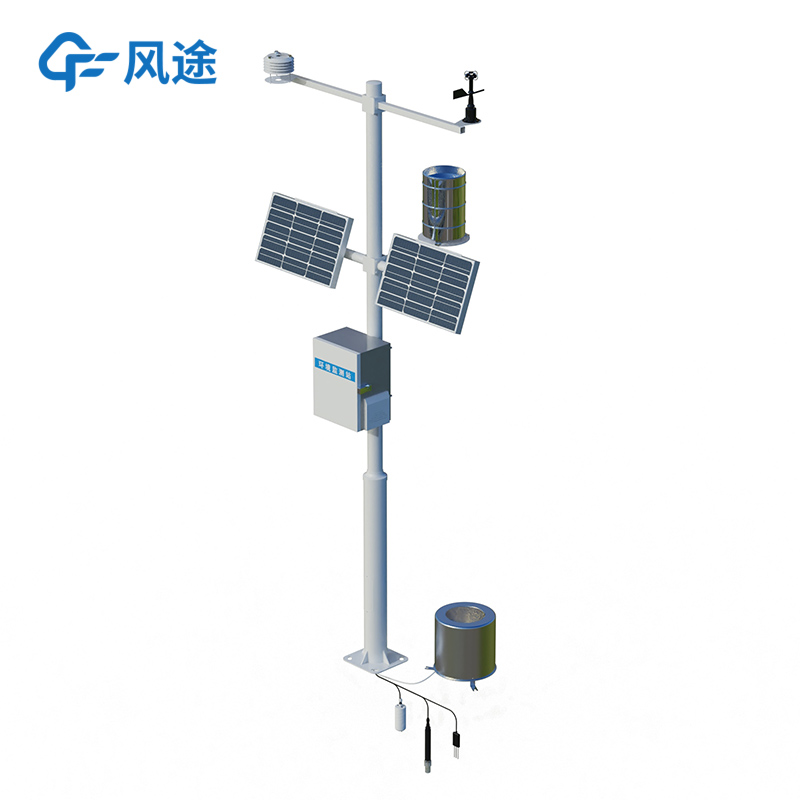
An Automatic Farmland Weather Station is an unattended observation system based on IoT technology that can automatically and continuously monitor the microclimate environment and soil conditions of farmland.
It integrates multiple sensors for meteorology and soil, enabling automatic and continuous monitoring of parameters such as air temperature and humidity, wind speed, precipitation, sunlight, and soil moisture. Through solar power supply and 4G/IoT technology for wireless data transmission, it achieves long-term stable operation without human intervention.
Users can view data in real-time via mobile phones or computers. It can issue precise warnings based on data (such as frost damage, drought) and directly guide farming activities like irrigation and fertilization, effectively reducing risks, saving resources, and improving crop yield and quality. It is mainly applied in large-scale production management of major food crops such as wheat, rice, and corn, or in high-value plantations of orchards, tea gardens, tobacco, sugarcane, and medicinal materials, as well as in experiments and research at agricultural research institutes and agricultural technology extension stations.
In the road traffic environment safety monitoring system, the Laser Snow Depth Monitor, especially in areas with frequent snowfall in winter, can accurately and real-time monitor the depth of snow on the road surface. It provides key data for traffic management departments, helping to ensure road sa...
As the name suggests, an air quality sensor monitors carbon monoxide (CO), sulfur dioxide (SO₂), nitrogen dioxide (NO₂), and ozone (O₃). CO mainly comes from incomplete combustion of fuels, such as automobile exhaust and industrial waste gas emissions. SO₂ is mostly produced by the combustion of...
Canals, as critical water transportation corridors, are highly sensitive to meteorological conditions and require multiple weather sensors to monitor their climatic status, ensuring navigation safety and the normal operation of canal facilities.What types of weather sensors are needed for canals?Sen...
Fluorescent Quantitative PCR Detection System is a laboratory instrument integrating fluorescence optical detection, a temperature control system, and data analysis software. It employs four-channel fluorescence detection and a 48-well reaction module, with a maximum power of 550W and a weight...


 Skype
Skype
 whatsapp
 mail
mail