Tianqiong Sensor IOT Technology Co., Ltd
Sales Manager:Ms. Emily Wang
Cel,Whatsapp,Wechat:+86 15898932201
Email:info@fengtutec.com
Add:No. 155 Optoelectronic Industry Accelerator, Gaoxin District, Weifang, Shandong, China


Sales Manager:Ms. Emily Wang
Cel,Whatsapp,Wechat:+86 15898932201
Email:info@fengtutec.com
Add:No. 155 Optoelectronic Industry Accelerator, Gaoxin District, Weifang, Shandong, China
time:2025-09-29 09:05:41 source:Weather Station viewed:401 time
While traditional environmental air quality monitoring stations (national and provincial control points) provide accurate data with legal validity, their high construction and operational costs result in insufficient spatial distribution density. This sparse layout primarily serves regional macro air quality assessment and cannot accurately reflect pollution distribution differences within complex urban environments, such as industrial zones, traffic arteries, commercial areas, and residential neighborhoods. Furthermore, it cannot achieve rapid location and tracking of pollution sources. When pollution occurs, the traditional system can determine the overall regional pollution level but cannot provide spatial decision-making basis for precise law enforcement and rapid response.
To address these challenges, advancements in monitoring technology have provided feasible solutions. The maturity of sensor technology has made it possible to obtain minute-level continuous monitoring data for key parameters such as PM2.5, PM10, SO₂, NOx, and O₃ at relatively low costs. These miniature sensor devices are small in size and low in energy consumption, facilitating high-density and flexible deployment on urban streetlights, traffic barriers, building rooftops, etc., forming the physical foundation of a grid-based monitoring network.
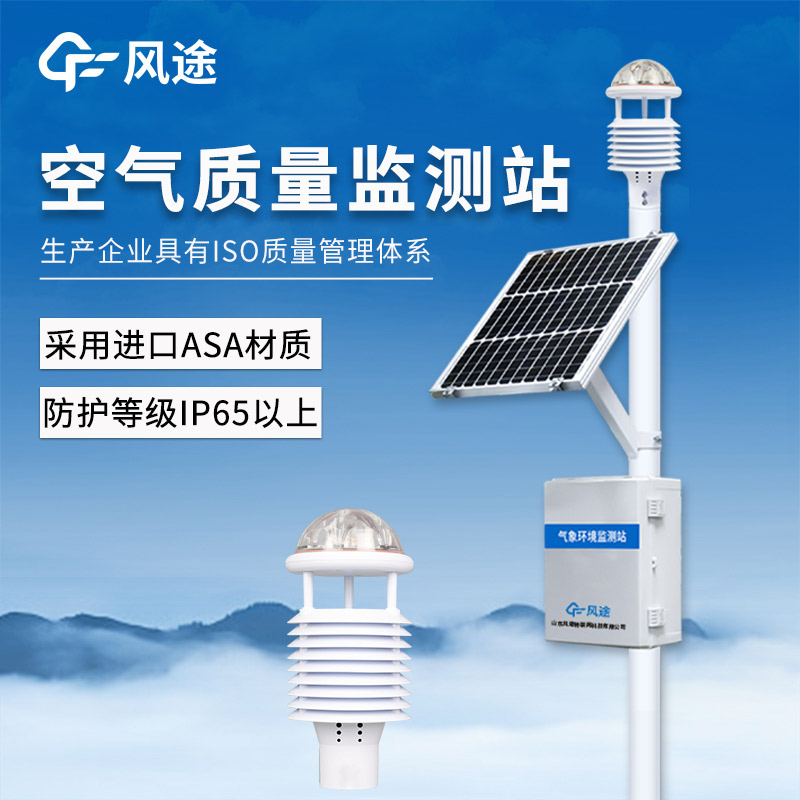
Air quality monitoring station represents an important innovation in the field of environmental monitoring in recent years. Through high-density, low-cost micro-sensor networks, it achieves refined and precise monitoring of regional environmental quality, particularly air pollution, effectively compensating for the shortcomings of traditional monitoring stations.
Once abnormal data is detected at a micro-station, the system immediately sends an alert to the supervisor responsible for that grid through the platform or mobile APP. Grid managers must promptly conduct on-site inspections, handle the situation, and feed back results, forming a closed-loop management process of "detection-warning-disposal-feedback."
The construction of hydrological monitoring station networks in irrigation districts utilizes microwave radar technology to measure water level, flow velocity, flow rate, and rainfall in channels in a non-contact manner. This method is unaffected by silt and floating debris, providing high-pre...
The FT-YC03 Online Dust Monitoring System is an intelligent monitoring device that integrates multiple sensing and transmission technologies, designed for monitoring dust and noise pollution. It is widely used in environmental supervision and other fields.In the process of urbanization and ind...
The electronic weather meter is a portable meteorological observation instrument that integrates the measurement of multiple weather parameters into a single unit. It is capable of simultaneously and accurately measuring factors such as wind speed, wind direction, average wind speed, temperatu...
Our self-developed Portable Weather Station breaks through the scenario limitations of traditional meteorological equipment. With multi-dimensional monitoring capabilities and high-precision performance, it has become the preferred equipment for various mobile monitoring scenarios.The device can sim...


 Skype
Skype
 whatsapp
 mail
mail