Tianqiong Sensor IOT Technology Co., Ltd
Sales Manager:Ms. Emily Wang
Cel,Whatsapp,Wechat:+86 15898932201
Email:info@fengtutec.com
Add:No. 155 Optoelectronic Industry Accelerator, Gaoxin District, Weifang, Shandong, China


Sales Manager:Ms. Emily Wang
Cel,Whatsapp,Wechat:+86 15898932201
Email:info@fengtutec.com
Add:No. 155 Optoelectronic Industry Accelerator, Gaoxin District, Weifang, Shandong, China
time:2025-05-20 09:38:08 source:Weather Station viewed:441 time
Canals, as critical water transportation corridors, are highly sensitive to meteorological conditions and require multiple weather sensors to monitor their climatic status, ensuring navigation safety and the normal operation of canal facilities.
What types of weather sensors are needed for canals?
Sensor for wind speed and direction. Wind speed and direction are crucial for the safe navigation of vessels on canals. For example, on inland waterways such as the Beijing-Hangzhou Grand Canal, strong winds can affect a ship’s stability and speed, potentially causing it to deviate from its course or collide with other vessels. By installing sensors for wind speed and direction, real-time monitoring of wind changes can provide timely meteorological information to ship operators, allowing them to adjust speed and heading to ensure safe navigation. Meanwhile, this data also provides a reference for canal management authorities to plan and manage waterways.
Temperature and humidity sensor. Changes in temperature and humidity can affect the environment around canals and the operation of certain facilities. In high-temperature and high-humidity environments, metal facilities on canals are prone to corrosion and rust, affecting their service life and safety. In low-temperature conditions, canal water surfaces may freeze, obstructing ship traffic. Temperature and humidity sensors can continuously monitor these parameters around canals, providing data support for implementing corresponding protective measures—such as timely maintenance of facilities in high temperatures or pre-emptive anti-freezing preparations in low temperatures.
Rain sensor. Precipitation is a key factor influencing canal water levels. Excessive rainfall can cause water levels to rise, potentially triggering floods that damage riverbanks and other facilities, endangering surrounding areas. Insufficient rainfall can lead to low water levels, affecting normal ship passage. Rain sensors can accurately measure precipitation, providing a data-driven basis for water level regulation and flood control in canals—enabling timely actions such as opening floodgates in advance or replenishing water supplies.
Tianqiong offers multiple sensor models suitable for canal applications. For example, the FT-Y6 micro weather sensor innovatively integrates six parameters—ambient temperature, relative humidity, wind speed, wind direction, atmospheric pressure, and piezoelectric rainfall—into a highly integrated structure. It enables 24-hour continuous online monitoring of outdoor meteorological parameters and outputs all six parameters at once via a digital communication interface, meeting the multi-parameter monitoring needs of canals. Another example is Fengtu’s ultrasonic sensor for wind speed and direction, developed based on ultrasonic principles. It features a miniaturized, fully digital, and highly integrated design, is durable, and can accurately measure wind speed and direction, providing reliable data for canal navigation safety.
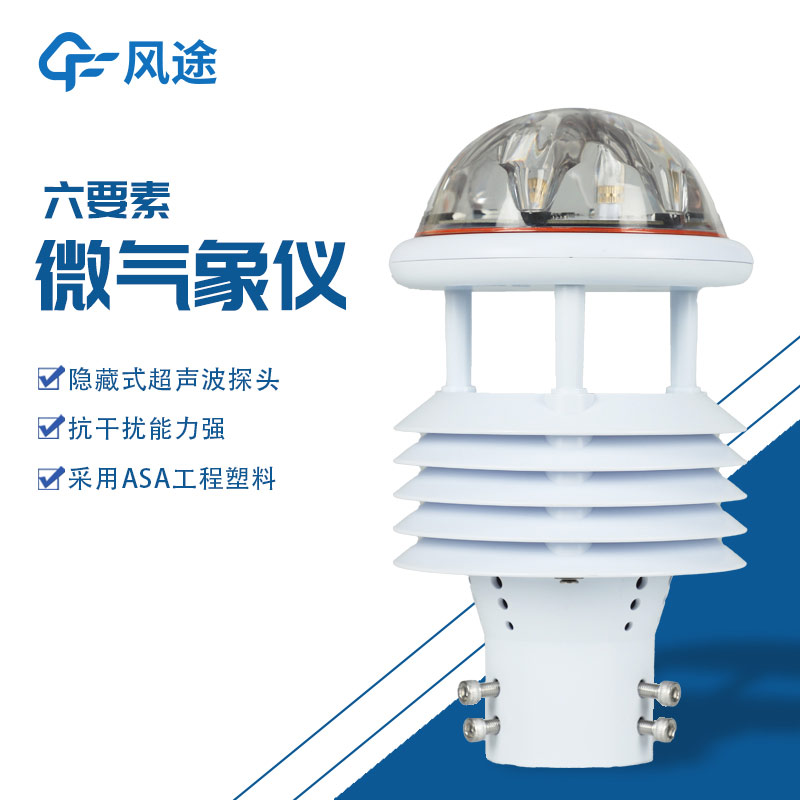
The next-generation standard Farmland Weather Station deeply integrates IoT (Internet of Things) technology and big data analysis. As a crucial tool in modern agricultural production monitoring, it provides farmers with full-process production data support from sowing to harvest.The station is speci...
Within the meteorological observation system, meteorological stations encompass various types such as National Climate Observatories, National Reference Climate Stations, National Basic Meteorological Stations, National Meteorological Observation Stations, and Regional Automatic Meteorological Stati...
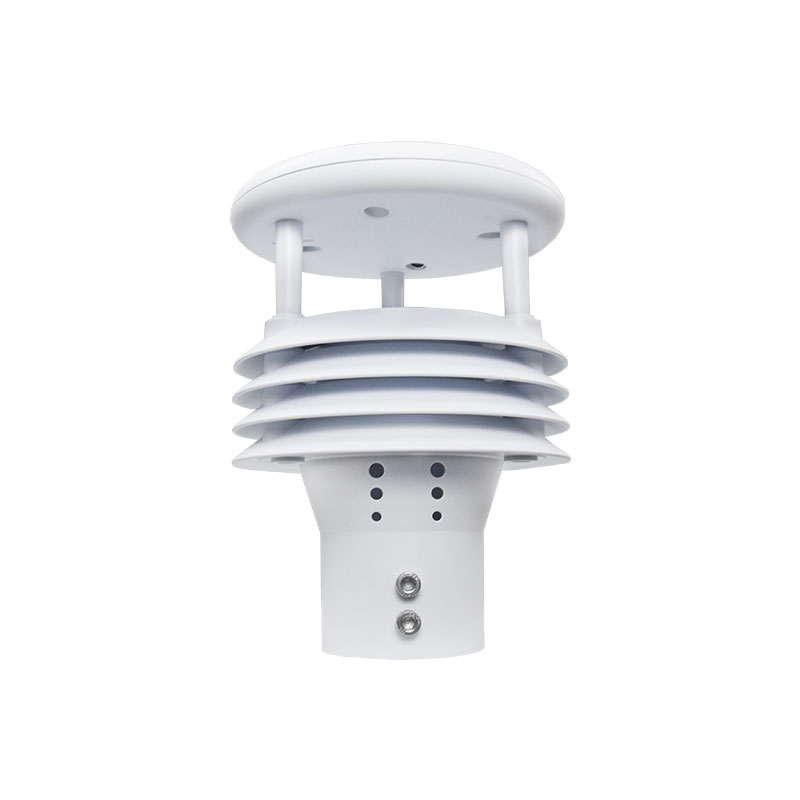
weather monitoring system is an unattended meteorological data acquisition system that uses ultrasonic principles to measure wind speed and direction. This system integrates data acquisition, storage, and transmission functions, featuring a compact structure and easy installation....
The core component of an ultrasonic anemometer is the ultrasonic transducer—a device specifically designed to transmit and receive ultrasonic waves. The entire equipment contains four such transducers. It adopts the ultrasonic time-difference method to measure wind speed and wind direction. The pri...


 Skype
Skype
 whatsapp
 mail
mail