Tianqiong Sensor IOT Technology Co., Ltd
Sales Manager:Ms. Emily Wang
Cel,Whatsapp,Wechat:+86 15898932201
Email:info@fengtutec.com
Add:No. 155 Optoelectronic Industry Accelerator, Gaoxin District, Weifang, Shandong, China


Sales Manager:Ms. Emily Wang
Cel,Whatsapp,Wechat:+86 15898932201
Email:info@fengtutec.com
Add:No. 155 Optoelectronic Industry Accelerator, Gaoxin District, Weifang, Shandong, China
time:2025-09-09 09:10:02 source:Weather Station viewed:398 time
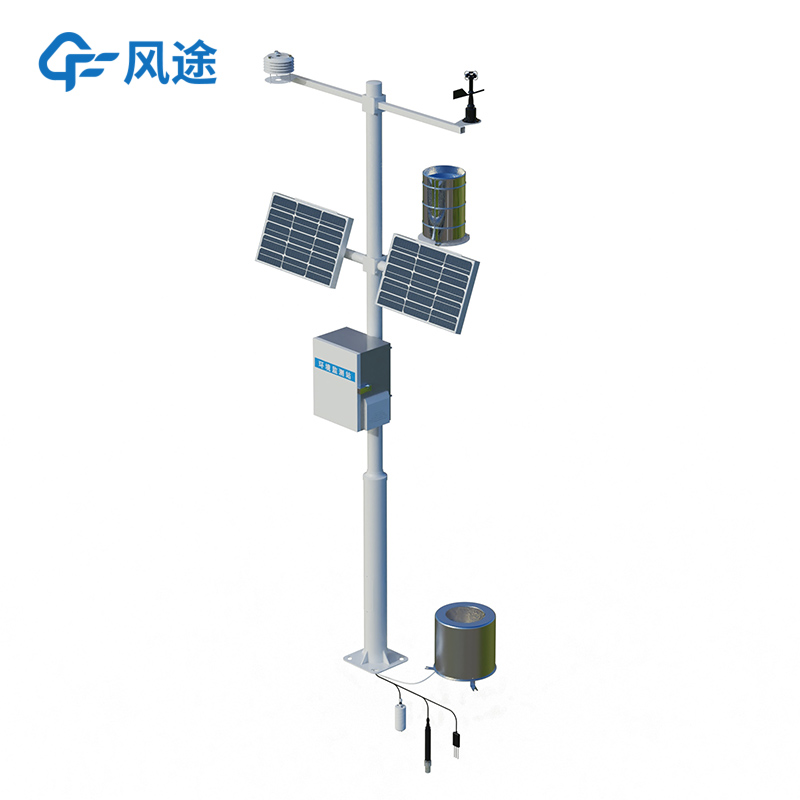
The next-generation standard Farmland Weather Station deeply integrates IoT (Internet of Things) technology and big data analysis. As a crucial tool in modern agricultural production monitoring, it provides farmers with full-process production data support from sowing to harvest.
The station is specially equipped with multi-layer soil moisture, temperature, and salinity sensors. These sensors can penetrate different depths of the soil to collect core data—such as soil moisture content, salinity concentration, and temperature changes—in real time and with high accuracy. Moreover, the frequency of data collection can be adjusted according to the crop growth cycle, ensuring that every set of data reflects the true condition of the soil.
With such real-time and accurate soil data, farmers no longer need to rely on "traditional experience" for farming; instead, they can implement more scientific irrigation and fertilization. For instance, when growing wheat, by monitoring the soil moisture in the 10-20 cm surface layer, farmers can precisely control the amount of irrigation water during the jointing stage, preventing wheat root rot caused by excessive water. When growing vegetables, adjusting the ratio of nitrogen fertilizer to potassium fertilizer based on soil salinity data not only avoids root burn due to excessively high salinity but also prevents poor vegetable quality caused by insufficient salinity. This mode of precision management not only significantly improves agricultural production efficiency—increasing crop yield by an average of 10%-15%—but also reduces water resource waste by approximately 30% and mitigates soil pollution from over-fertilization, effectively enhancing the utilization efficiency of agricultural resources.
In addition to its core soil monitoring function, the station can be flexibly equipped with meteorological monitoring modules to adapt to agricultural production needs in different regions. After installing the modules, it can continuously monitor meteorological parameters 24 hours a day, including air temperature and humidity, wind direction and speed, rainfall, total radiation, sunshine duration, and photosynthetically active radiation. The data is transmitted to farmers’ mobile phones or computers in real time, allowing for convenient access anytime. Using this meteorological data, farmers can predict weather changes 3-5 days in advance and prepare for disaster early warning: for example, if heavy rain is expected in summer, they can reinforce greenhouse supports and clear field drainage ditches in advance; if a cold wave with temperature drops is coming in winter, they can cover crops with thermal insulation films. Additionally, based on data such as sunshine duration and photosynthetically active radiation, farmers can formulate more reasonable production plans—such as determining the optimal time for vegetable seedling raising and arranging the timing for fruit tree pruning—making agricultural production more scientific and planned.
The Handheld Weather meter is extremely lightweight with an ergonomic design that can be held and operated with one hand. It can real-time monitor five core meteorological elements: wind speed, wind direction, temperature, humidity, and atmospheric pressure. Its rugged housing design can withstand c...
Against the backdrop of accelerating informatization in water conservancy, the demand for monitoring in the field of water conservancy management is rising increasingly. To address issues such as frequent flood disasters and the need to improve the efficiency of water resource management, a Water Le...
This fully automatic online hydrological monitoring system is based on microwave technology. It employs K-band planar radar technology to non-contactly measure water level, flow velocity, flow rate, and rainfall within channels. The system's built-in algorithm calculates cross-sectional fl...
The Ultrasonic Wind Speed Direction Sensor achieves measurement based on the characteristics of ultrasonic waves propagating in the air. It accurately calculates the wind speed and direction by measuring the time difference of ultrasonic waves propagating in different directions. This non-mechanical...


 Skype
Skype
 whatsapp
 mail
mail