Tianqiong Sensor IOT Technology Co., Ltd
Sales Manager:Ms. Emily Wang
Cel,Whatsapp,Wechat:+86 15898932201
Email:info@fengtutec.com
Add:No. 155 Optoelectronic Industry Accelerator, Gaoxin District, Weifang, Shandong, China


Sales Manager:Ms. Emily Wang
Cel,Whatsapp,Wechat:+86 15898932201
Email:info@fengtutec.com
Add:No. 155 Optoelectronic Industry Accelerator, Gaoxin District, Weifang, Shandong, China
time:2026-04-22 11:25:16 source:Weather Station viewed:167 time
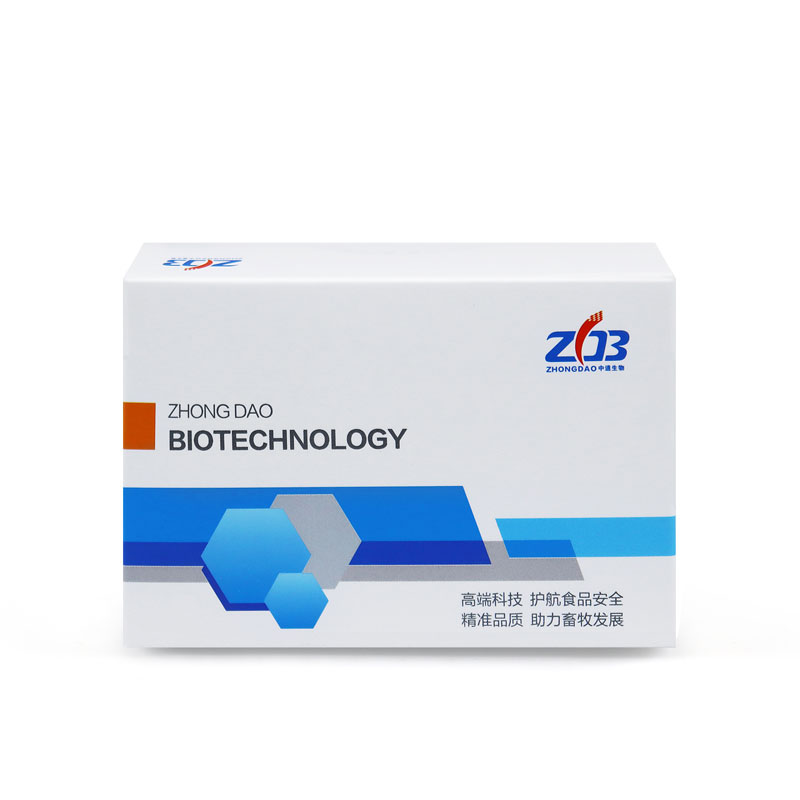
African Swine Fever Detection is based on TaqMan probe-based fluorescence PCR technology and is designed for the rapid detection of African Swine Fever Virus (ASFV) nucleic acid. It is suitable for use with various tissue samples—including blood, spleen, lymph nodes, and tonsils—as well as environmental swabs from pigs, serving as an essential tool for auxiliary diagnosis and epidemiological investigations in livestock farms and veterinary laboratories.
African Swine Fever Detection stands as a core tool for ASFV nucleic acid detection, widely utilized in disease surveillance and clinical diagnosis within commercial pig farms. Current mainstream products in this category are based on fluorescence PCR technology utilizing the TaqMan probe method; they employ specific primers and fluorescent probes designed based on the conserved genes of the ASFV. By detecting viral nucleic acid through *in vitro* amplification, these products offer high sensitivity and strong specificity. The Ministry of Agriculture and Rural Affairs has approved the registration of African Swine Fever Detection products from multiple manufacturers, issuing corresponding quality standards, instructions for use, and labeling requirements to ensure full compliance with national veterinary drug administration regulations.
African Swine Fever Detection is compatible with a wide variety of sample types. Blood samples should be collected using EDTA-anticoagulant tubes and thoroughly mixed. For tissue samples—such as lesioned spleen, liver, lymph nodes, or tonsils—approximately 0.1 grams of tissue should be collected, minced, and then placed in a tissue homogenizer or mortar for thorough grinding. Physiological saline is then added and mixed; after centrifugation, the supernatant is collected for subsequent analysis. Soft tick samples may be processed using the same methodology. The kit is also applicable for testing samples such as blood meal, animal feed, and environmental swabs, thereby providing technical support for environmental monitoring within livestock farms. To prevent cross-contamination, the nucleic acid extraction and amplification steps must be performed in strictly separated zones, and reagent preparation and sample loading should be conducted on ice.
Detection performance varies among different brands of African Swine Fever Detection. A comparative study evaluating nine commercially available ASFV fluorescence PCR kits revealed that while some products demonstrated stable detection across high, medium, and low-concentration samples—exhibiting minimal fluctuation in Ct values and demonstrating superior sensitivity and reliability—other products frequently failed to detect the virus at medium-to-low concentrations, indicating insufficient stability. When selecting diagnostic kits, breeding farms and testing institutions should consult comparative data on similar products and opt for those that have been evaluated by authoritative bodies. African Swine Fever Detection can also be used in conjunction with ELISA antibody detection kits to establish a combined antigen-antibody detection protocol. ELISA kits determine the presence of viral antibodies in samples through a colorimetric reaction, making them suitable for large-scale serological surveys.
Technological innovation regarding African Swine Fever Detection continues to advance. Dual-fluorescence PCR kits can simultaneously distinguish between wild-type and vaccine strains of Classical Swine Fever, providing a basis for adjusting immunization protocols and tracing the origins of outbreaks. Furthermore, multiplex detection kits enable the simultaneous detection of African Swine Fever virus, Porcine Epidemic Diarrhea virus, Transmissible Gastroenteritis virus, and Porcine Rotavirus, thereby enhancing detection efficiency. Group standards—such as those for microfluidic fluorescence PCR detection methods—have also been published, further standardizing testing procedures. LAMP detection kits are characterized by their operational simplicity and rapid results, making them ideal for rapid on-site screening. These technological advancements provide robust support for the early detection and precise prevention and control of African Swine Fever.
To measure water levels, a Radar Water Level Sensor is required, such as the YW-76 introduced today. Let's take an in-depth look at its advantages and working principle.1. High-frequency Technology Ensures Measurement AccuracyThe YW-76 horn-type Radar Water Level Sensor adopts Frequency Modulate...
PCR Machine supports the simultaneous detection of two fluorescently labeled targets within a single reaction well. Its 16-well sample throughput combined with a dual-channel parallel design doubles the information obtained in a single detection. The device utilizes an imported high-quality TE...
Faced with numerous types of anemometers on the market, how can one select a product that meets their own needs? First, let's understand the common types of anemometers.Mechanical AnemometerAmong mechanical anemometers, the cup anemometer is relatively common. It relies on the rotation of cups u...
In the modern industrial field, the chemical industry has an extremely high demand for meteorological monitoring. The chemical production process is complex and involves many flammable, explosive, and corrosive chemical substances. For example, in a chemical industrial park, under different meteorol...


 Skype
Skype
 whatsapp
 mail
mail