Tianqiong Sensor IOT Technology Co., Ltd
Sales Manager:Ms. Emily Wang
Cel,Whatsapp,Wechat:+86 15898932201
Email:info@fengtutec.com
Add:No. 155 Optoelectronic Industry Accelerator, Gaoxin District, Weifang, Shandong, China


Sales Manager:Ms. Emily Wang
Cel,Whatsapp,Wechat:+86 15898932201
Email:info@fengtutec.com
Add:No. 155 Optoelectronic Industry Accelerator, Gaoxin District, Weifang, Shandong, China
time:2026-02-05 10:36:21 source:Weather Station viewed:297 time
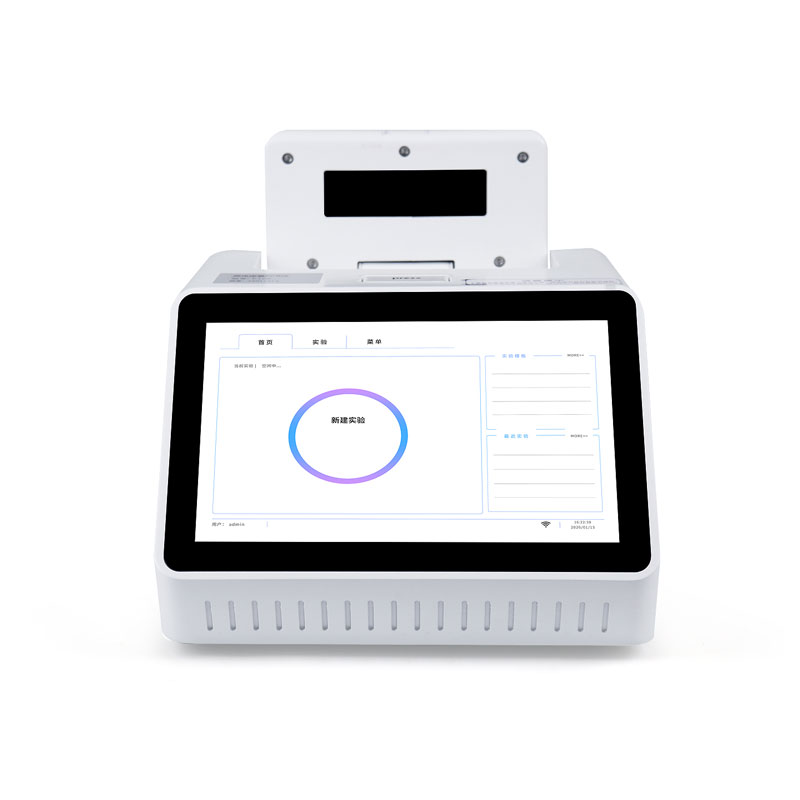
Real Time PCR is a high-precision instrument for real-time monitoring of the PCR amplification process, featuring an 8-well single-channel design. By combining PCR amplification and fluorescence detection technology, it enables rapid and accurate quantitative analysis of nucleic acid targets, serving fields such as molecular diagnostics, pathogen detection, gene expression analysis, and life science research.
Real Time PCR is a high-precision analytical instrument used for real-time monitoring of the polymerase chain reaction (PCR) process. Its core function is to achieve quantitative and qualitative analysis of target nucleic acid fragments (DNA or cDNA) by adding fluorescent groups to the PCR amplification reaction system and using an optical system to collect fluorescence signals in the reaction tubes in real time. This technology upgrades traditional endpoint PCR detection to dynamic quantitative analysis that allows observation of the entire amplification process.
The basic principle of the instrument is to detect the signal intensity of the fluorescent dye that specifically binds to the amplification product after each extension step of the PCR cycle. As the target nucleic acid fragment amplifies exponentially, the fluorescence signal increases accordingly. The instrument's built-in software real-time plots the amplification curve showing the change in fluorescence intensity with the number of cycles. By analyzing the curve, particularly by determining the cycle threshold (Ct value), the initial concentration of the template nucleic acid at the start of the reaction can be accurately calculated, enabling absolute or relative quantification.
Taking the single-channel 8-well model as an example, this type of instrument has a compact structure and is suitable for laboratories with moderate sample volumes. Its key performance features include a precise temperature control system. PCR reactions are highly sensitive to temperature changes, and the instrument needs to ensure the uniformity and accuracy of the temperature between and within the sample wells, which is fundamental to obtaining reliable and reproducible amplification results. In addition, the instrument is usually equipped with a high-efficiency optical detection module that can sensitively capture weak fluorescence signal changes. The accompanying data management software provides a complete solution from experimental setup, data acquisition, curve analysis to results reporting, and some software supports data analysis for multi-channel multiplex detection.
In practical applications, Real Time PCR has a wide range of uses. In the field of molecular diagnostics and clinical testing, it is a core tool for nucleic acid detection of pathogens (such as viruses and bacteria), used for infectious disease diagnosis, viral load monitoring, and genetic disease gene mutation screening. In life science research, researchers utilize this technology for differential gene expression analysis (such as comparing mRNA expression levels of specific genes under different tissue or treatment conditions), microRNA research, and single nucleotide polymorphism (SNP) genotyping. Its quantitative capabilities allow research to move beyond simply determining "presence or absence" to understanding "how much" is present.
During operation, users place the prepared reaction system into the instrument's sample wells, set the amplification program (including temperature and time parameters for denaturation, annealing, and extension), and configure the fluorescence acquisition scheme. The instrument operates automatically without manual intervention, completing all cycles and recording data. After the run, users can immediately view amplification curves and quantitative results through the software.
Therefore, Real Time PCR, with its real-time, quantitative, highly specific, and highly sensitive technical advantages, has become an indispensable standard instrument in modern molecular biology laboratories, clinical testing centers, and disease prevention and control institutions. It has driven the advancement of nucleic acid detection from qualitative to quantitative analysis, providing strong technical support for precision medicine, disease prevention and control, and cutting-edge life science research.
In today's society, environmental problems are becoming more and more serious. From air pollution to water quality deterioration, from soil pollution to noise interference, these issues seriously affect the survival and development of human beings. As an important cornerstone of environmental pr...
High-Precision Handheld 9-Parameter Weather Station integrates measurement functions for wind speed, wind direction, temperature, humidity, atmospheric pressure, altitude, heat index, and wet-bulb temperature. With a wind speed accuracy of ±0.3 m/s, a temperature accuracy of ±0.2°C, and a h...
In chemical plants, large quantities of flammable, explosive, toxic, and harmful chemicals are typically stored and used, with production processes often conducted under extreme conditions such as high/low temperature, high/low pressure. In such environments, changes in meteorological conditions can...
An ultrasonic weather station is a modern meteorological monitoring device designed based on the principles of ultrasonics. It measures atmospheric parameters to provide real-time and accurate weather data for environmental monitoring, agriculture, urban management, and other fields. Compared to tra...


 Skype
Skype
 whatsapp
 mail
mail