Tianqiong Sensor IOT Technology Co., Ltd
Sales Manager:Ms. Emily Wang
Cel,Whatsapp,Wechat:+86 15898932201
Email:info@fengtutec.com
Add:No. 155 Optoelectronic Industry Accelerator, Gaoxin District, Weifang, Shandong, China


Sales Manager:Ms. Emily Wang
Cel,Whatsapp,Wechat:+86 15898932201
Email:info@fengtutec.com
Add:No. 155 Optoelectronic Industry Accelerator, Gaoxin District, Weifang, Shandong, China
time:2026-02-12 10:39:09 source:Weather Station viewed:270 time
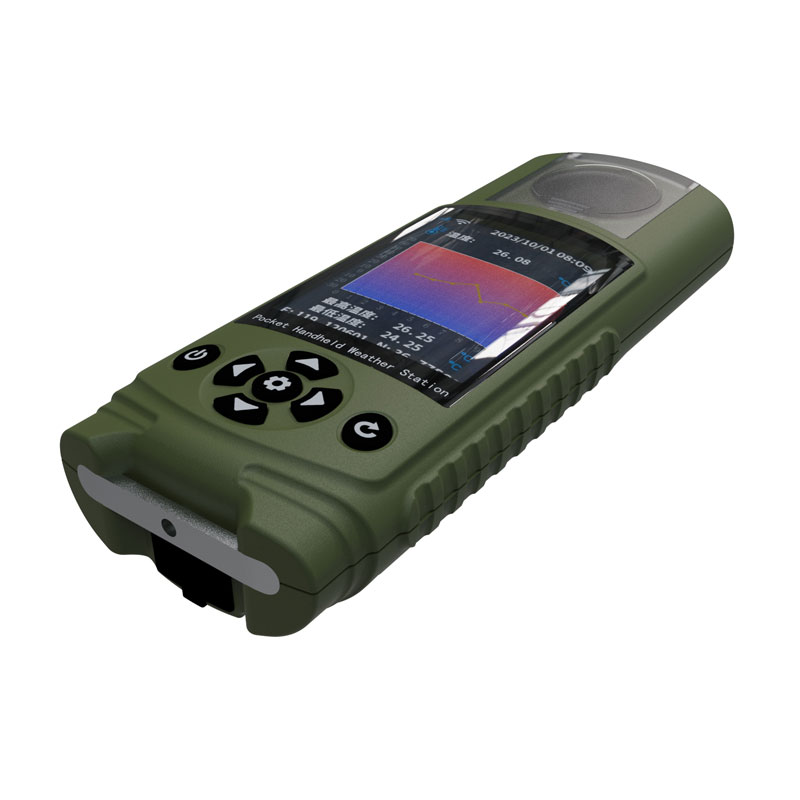
Pocket Weather Meter integrates sensors for wind speed and direction, temperature and humidity, atmospheric pressure, illumination, total radiation, ultraviolet radiation, and runway temperature, measuring multiple meteorological and road surface parameters in real time. The device employs ultrasonic or mechanical wind sensing technology, outputting data with second-level response times. It is suitable for monitoring microclimates in airports, highways, meteorological stations, photovoltaic power plants, and agriculture, supporting refined environmental perception and operational decision-making.
Traditional Pocket Weather Meter devices primarily measure instantaneous wind speed and direction, with applications concentrated in meteorological observation and ventilation system monitoring. The current multi-functional Pocket Weather Meter has evolved into an integrated environmental monitoring terminal, embedding multiple sensors such as wind, temperature and humidity, radiation, and road surface conditions within a single device, meeting the continuous data acquisition needs of local meteorological conditions in transportation, energy, construction, and agriculture.
The wind speed measurement section can be configured with either ultrasonic or mechanical wind cup structures. The ultrasonic Pocket Weather Meter calculates wind speed and direction by measuring the time difference of sound wave propagation in the air with and against the wind. It has no moving parts, is resistant to sandstorms and freezing rain, and can operate at wind speeds below 0.1 meters per second. The mechanical Pocket Weather Meter employs lightweight wind cups and wind vanes, suitable for conventional meteorological stations and long-term fixed-point observations. The atmospheric pressure sensor, based on MEMS piezoresistive principles, outputs altitude-corrected pressure values. Temperature and humidity probes are housed within radiation shields to prevent measurement deviations caused by solar heating.
The illumination and radiation measurement module includes a total radiometer, an ultraviolet radiometer, and a quantum sensor. The total radiometer measures shortwave solar radiation flux for evaporation estimation and photovoltaic power generation prediction. The ultraviolet radiometer monitors the UV-A or UV-B bands, serving public health and materials aging research. The runway temperature sensor uses infrared non-contact thermometry, projecting onto specific points on the pavement and outputting surface temperature values for airport pavement icing warnings and high-temperature softening risk assessment. The illuminance sensor measures visible light intensity in lux, suitable for plant supplemental lighting control and intelligent lighting systems.
In the civil aviation meteorological field, the equipment is deployed at runway entrances, middle sections, and ends, providing real-time output of runway visual range, crosswind components, and pavement conditions. Data is integrated into air traffic control and meteorological systems to assist pilots in takeoff and landing decisions and to coordinate de-icing operations. Multifunctional Pocket Weather MeterX devices are deployed along highways to monitor crosswind risk sections; electronic displays indicate speed limits when gusts exceed thresholds. Photovoltaic power plants utilize radiation and wind speed data to calculate module backsheet temperature and correct power prediction models.
In agricultural settings, the equipment is installed in orchards, greenhouses, and fields to collect cumulative sunlight and evapotranspiration parameters, guiding irrigation initiation and the deployment and retraction of shade nets. In urban meteorological monitoring networks, multifunctional Pocket Weather MeterX devices fill gaps in wind environment monitoring between building clusters, providing measured data for ventilation corridor planning and heat island assessment.
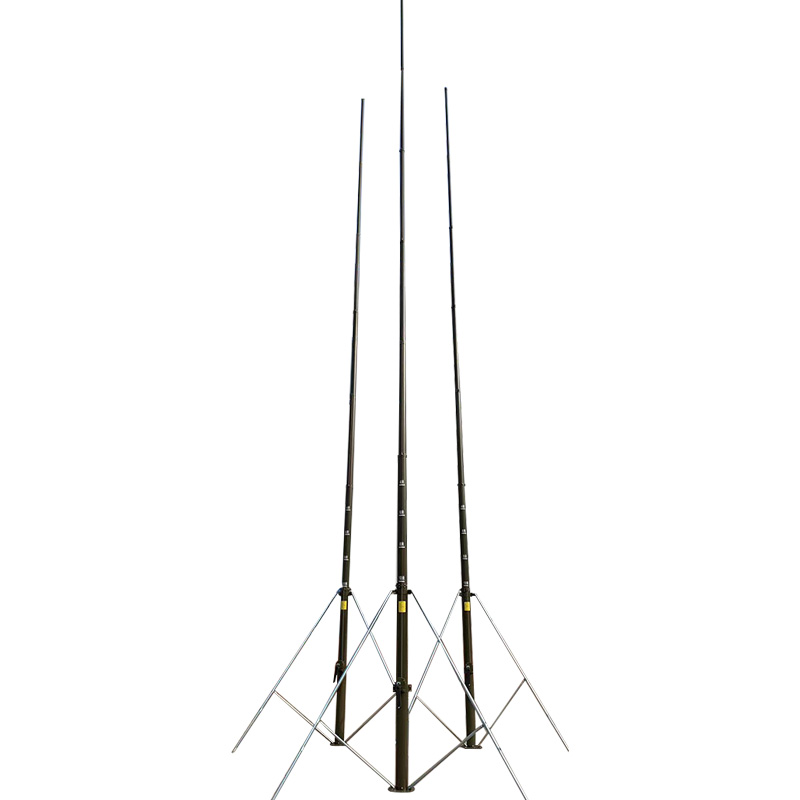
The entire device features a low-power design, supporting solar power and 4G remote transmission. Data output follows the Modbus protocol or SDI-12 interface, compatible with mainstream meteorological data loggers and IoT platforms. It has an IP65 protection rating and an operating temperature range of -40°C to 60°C. The mounting bracket height is adjustable to suit unobstructed observation environments with good visibility. With the increasing density of automatic weather station networks and the deployment of edge computing, multi-functional Pocket Weather Meter is evolving from a single wind measurement device into a core node for three-dimensional perception of meteorological elements.
EL (Electroluminescence) detection, a non-destructive testing method, works as follows: When a forward bias is applied to a photovoltaic (PV) module, electrons and holes diffuse to the P and N regions, respectively. The radiative recombination of charge carriers generates photons, resulting in the e...
Pocket Weather Meter integrates sensors for wind speed and direction, temperature and humidity, atmospheric pressure, illumination, total radiation, ultraviolet radiation, and runway temperature, measuring multiple meteorological and road surface parameters in real time. The device employs ult...
The Handheld Weather meter is extremely lightweight with an ergonomic design that can be held and operated with one hand. It can real-time monitor five core meteorological elements: wind speed, wind direction, temperature, humidity, and atmospheric pressure. Its rugged housing design can withstand c...
Handheld Anemometer is a portable meteorological observation instrument. Its wind speed measurement range is 0–30 m/s with an accuracy of ±0.3 m/s and a resolution of 0.01 m/s. Wind direction measurement range is 16 azimuths with an accuracy of ±1 azimuth. The instrument uses a three-cup ro...


 Skype
Skype
 whatsapp
 mail
mail