Tianqiong Sensor IOT Technology Co., Ltd
Sales Manager:Ms. Emily Wang
Cel,Whatsapp,Wechat:+86 15898932201
Email:info@fengtutec.com
Add:No. 155 Optoelectronic Industry Accelerator, Gaoxin District, Weifang, Shandong, China


Sales Manager:Ms. Emily Wang
Cel,Whatsapp,Wechat:+86 15898932201
Email:info@fengtutec.com
Add:No. 155 Optoelectronic Industry Accelerator, Gaoxin District, Weifang, Shandong, China
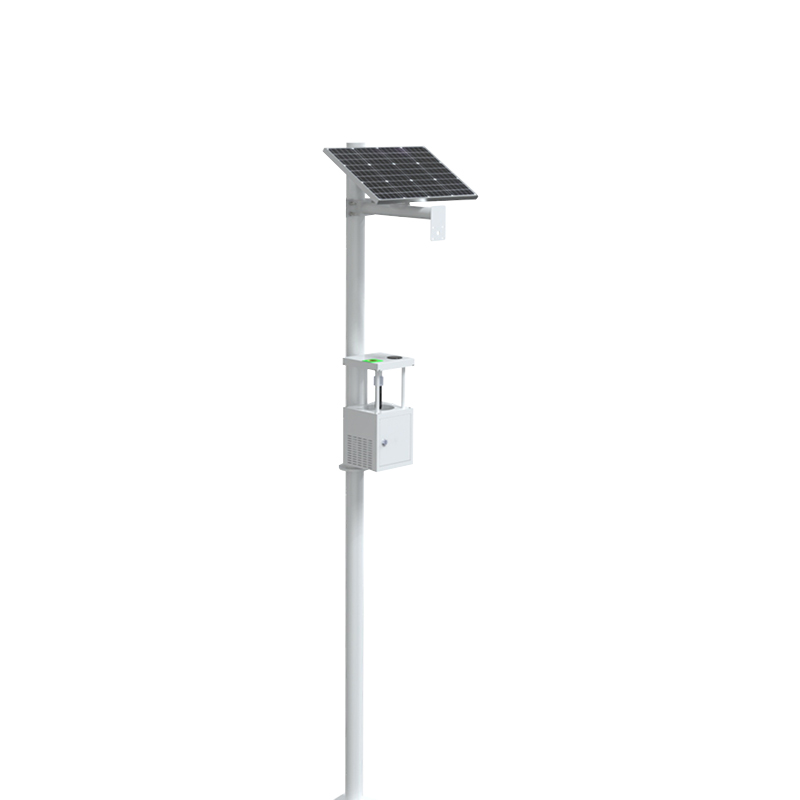
Model:FT-FD1
Brand:tianqiong
1.Mosquito Killing Lamp product overview
Mosquito Killing Lamp provides indoor and outdoor protection, a simple way to keep pesky mosquitoes and insects away, killing all types of insects that are attracted to the light waves.Mosquito Killing Lamp is a physical insect-killing device that uses light waves to lure adult insects to suck the light, and then the fan rotates to generate a negative pressure airflow to suck the insects into the collector, allowing them to dry and dehydrate, achieving the purpose of insect killing.The Mosquito Killing Lamp developed by our company has improved the light source and insecticide methods, broken through the ability to kill small pests with conventional insecticide lamps, and greatly improved the pest killing efficiency.The device uses solar panels as the power supply, stores power during the day and provides power for insecticide lamps at night, luring pests to flutter at the light source.The product consists of insect-induced light source, insect-killing components, insect-collection components, support components, etc.It has the characteristics of simple structure, easy installation, strong operability, many types of insecticides, wide range of insecticides, safe, environmentally friendly, and non-toxic.This product is widely used in agriculture, forestry, warehousing, fish ponds, etc., and can effectively prevent various lepidoptera pests.
2.Functional features of Mosquito Killing Lamp
1.When the sunlight intensity and rainfall are used to control whether the equipment is working, if it is detected or in the daytime state, the equipment is standby; when it is detected, there is no rain and it is in the dark state, the equipment is working normally.
2.Use a multi-spectrum insect-induced light source with wavelengths of 320nm-680nm to trap multiple types of pests at the same time.
3.Using high-power fans can greatly improve the number and efficiency of flukes.
4.Use new polycrystalline solar panels, which have high energy conversion and are environmentally friendly.
3.Mosquito Killing Lamp technical parameters
| Light source parameters | wavelength | 320nm-680nm |
| power | 15W | |
| Solar panel parameters | power | 30W |
| size | 505*430mm | |
| Fan parameters | powered by | 12V |
| power | 4W | |
| The actual power of the whole machine | ≤15W | |
| Pole parameters | diameter | 76mm |
| length | 3m | |
| Data upload method | Standalone version | |
| Service life span | ≥3 years | |
| Solar power supply system battery life | 2 to 3 consecutive days | |
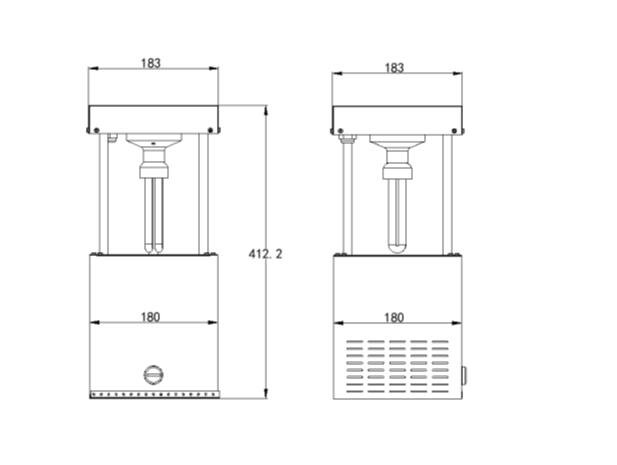
4.Mosquito Killing Lamp product size diagram
Based on real-time quantitative PCR (qPCR) technology, GMO Testing can specifically identify and quantitatively detect common GM components in corn, providing precise detection support for corn production, trade, safety supervision, and food processing....
In the fields of meteorological monitoring and hydrology, the piezoelectric rain gauge and the Radar Precipitation Sensor Rain Gauge Distrometer are commonly used rainfall monitoring devices. Today, the author will compare the differences between the two.The piezoelectric rain gauge works by u...
In the field of geological hazard monitoring and early warning (such as landslides, collapses, ground subsidence, debris flows, etc.), GNSS monitoring stations are a core technical means used for accurately measuring surface displacement and deformation.GNSS equipment precisely determines its absolu...
Pathogen detection is a device designed for the rapid and accurate detection of viruses in farmed fish and shrimp. It focuses on the detection of pathogen nucleic acids within samples, featuring multi-channel parallel processing capabilities that support both qualitative and quantitative analy...


 Get a Free Quote
 Skype
Skype
 whatsapp
 mail
mail