Tianqiong Sensor IOT Technology Co., Ltd
Sales Manager:Ms. Emily Wang
Cel,Whatsapp,Wechat:+86 15898932201
Email:info@fengtutec.com
Add:No. 155 Optoelectronic Industry Accelerator, Gaoxin District, Weifang, Shandong, China


Sales Manager:Ms. Emily Wang
Cel,Whatsapp,Wechat:+86 15898932201
Email:info@fengtutec.com
Add:No. 155 Optoelectronic Industry Accelerator, Gaoxin District, Weifang, Shandong, China
time:2026-03-23 13:27:13 source:Weather Station viewed:172 time
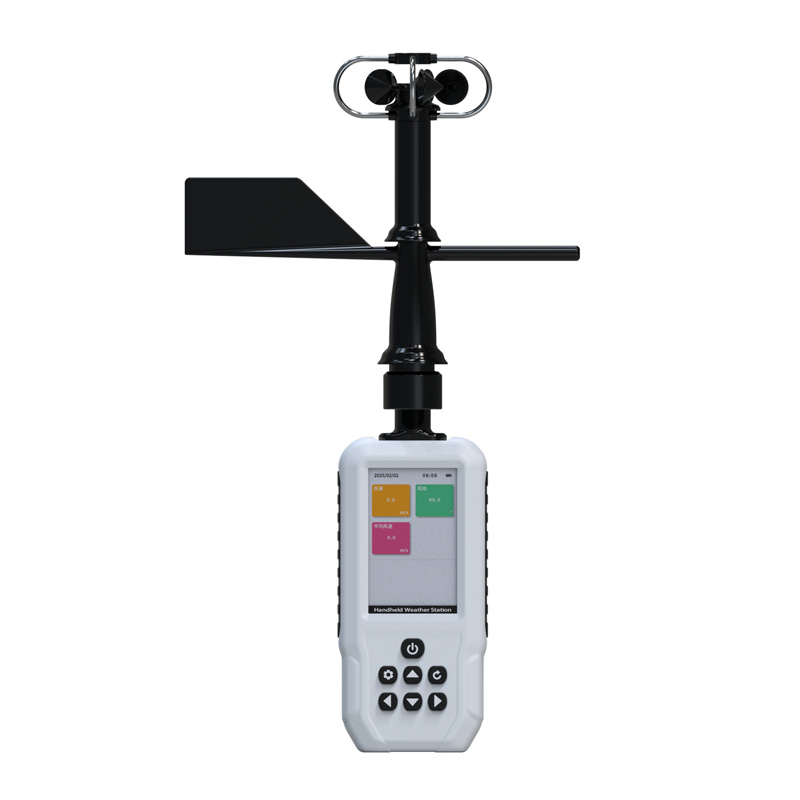
Anemometer and Wind Vane is a meteorological instrument designed to measure the speed and direction of airflow. It is capable of measuring instantaneous wind speed, instantaneous wind direction, and average wind speed. With a wind speed measurement range of 0 to 60 meters per second (m/s) and an accuracy of ±0.3 m/s—along with a wind direction accuracy of ±3 degrees—this device is well-suited for applications in meteorological services, wind power generation, road traffic management, and other related industries.
Anemometer and Wind Vane is a meteorological instrument used to measure airflow speed and direction, finding widespread application in fields such as meteorological monitoring, agriculture, environmental protection, and industry. The device measures three key parameters—instantaneous wind speed, instantaneous wind direction, and average wind speed—thereby providing accurate wind condition data to relevant sectors.
In terms of measurement performance, the wind speed measurement range spans from 0 to 60 m/s, with an accuracy of ±0.3 m/s and a resolution of 0.01 m/s. The wind direction measurement range covers 0 to 360 degrees, featuring an accuracy of ±3 degrees and a resolution of 0.1 degrees. The measurement range for average wind speed mirrors that of instantaneous wind speed—spanning 0 to 60 m/s—while maintaining the same levels of accuracy and resolution. These measurement specifications are sufficient to meet the requirements of most professional application scenarios.
The structure of the Anemometer and Wind Vane typically comprises two main components: a wind speed sensor and a wind direction sensor. The wind speed sensor commonly employs a three-cup structure, wherein three hemispherical cups are mounted on a horizontal rotating shaft. Driven by the force of the wind, these cups rotate at a speed that bears a linear relationship to the wind speed; this rotational motion is then converted into an electrical signal output via photoelectric or electromagnetic induction mechanisms. The wind direction sensor utilizes a tail-vane structure; the tail vane is driven by the wind to orient the sensor toward the direction from which the wind is blowing, while a potentiometer or photoelectric encoder measures the angular position to output the wind direction value.
Regarding data output, the device typically offers two options: analog output and digital output. Analog output options include a 4–20 mA current signal or a 0–5 V voltage signal, while digital output typically utilizes an RS485 interface paired with the Modbus communication protocol. Users may select the appropriate output method based on the specific interface requirements of their data acquisition system.
This device is suitable for use across a wide range of industries. In meteorological services, the Anemometer and Wind Vane serves as foundational equipment for surface weather observation, providing wind field data for weather forecasting. In the field of wind power generation, it is utilized for wind resource assessment and turbine control at meteorological masts and wind turbine nacelles. In road traffic applications, it is installed on bridges and along highways to monitor crosswind conditions, providing early warnings to ensure driving safety. In hydrometeorology, it is employed to measure wind speeds over water surfaces, thereby supporting hydrological forecasting and safety assessments for water-based operations.
The Anemometer and Wind Vane is constructed using weather-resistant materials; its housing features anti-corrosion and UV-resistant properties, enabling it to operate continuously outdoors over extended periods. During installation, it is essential to ensure that the area surrounding the sensor remains free of obstructions to guarantee unimpeded airflow and ensure the representativeness of the measurement results. With its precise measurement capabilities, this device effectively meets the diverse wind condition monitoring requirements across various industries.
With the acceleration of urbanization and industrialization, regional and complex air pollution problems have become increasingly prominent. Traditional ambient air quality monitoring networks typically consist of a limited number of well-equipped national or provincial control stations. While these...
fluorescence quantitative PCR instrument is a four-channel 16-well quantitative PCR instrument running on an Android operating system. It has a temperature control range of 4℃ to 99℃ and a heated lid temperature of 30℃ to 108℃, making it suitable for molecular diagnostics, pathogen detecti...
Home Weather Station is a portable environmental monitoring instrument used for on-site air quality monitoring. This device can measure multiple parameters in real time, including wind speed, wind direction, temperature, humidity, air pressure, PM2.5, PM10, and noise, providing an integrated on-site data acquisition solution for environmental assessment, industrial safety, and scientific research....
Ground-based meteorological observation statio is a multi-parameter automatic weather station that monitors multiple parameters in real time....


 Skype
Skype
 whatsapp
 mail
mail