Tianqiong Sensor IOT Technology Co., Ltd
Sales Manager:Ms. Emily Wang
Cel,Whatsapp,Wechat:+86 15898932201
Email:info@fengtutec.com
Add:No. 155 Optoelectronic Industry Accelerator, Gaoxin District, Weifang, Shandong, China


Sales Manager:Ms. Emily Wang
Cel,Whatsapp,Wechat:+86 15898932201
Email:info@fengtutec.com
Add:No. 155 Optoelectronic Industry Accelerator, Gaoxin District, Weifang, Shandong, China
time:2025-10-09 09:00:28 source:Weather Station viewed:450 time
With the acceleration of urbanization and industrialization, regional and complex air pollution problems have become increasingly prominent. Traditional ambient air quality monitoring networks typically consist of a limited number of well-equipped national or provincial control stations. While these standard monitoring stations provide authoritative and accurate data, their high construction and operational costs result in insufficient deployment density. Consequently, their monitoring results primarily reflect the overall average air quality levels of a region, making it difficult to capture subtle pollution variations within cities.
This "point-to-area" model has obvious limitations: it cannot accurately locate local pollution sources hidden near residential areas, industrial parks, or transportation corridors, nor can it clearly track the diffusion paths and evolution processes of pollutants. This often leaves environmental managers facing the dilemma of "not being able to identify pollution sources or clarify pollution trends" when addressing pollution issues. To meet the demand for more refined and rapid-response management of air pollution, the grid-based air quality monitoring model emerged.
The core concept of grid-based air quality monitoring is: by densely deploying a large number of miniature or miniaturized air monitoring devices at low cost, dividing the target area into several independent monitoring grids to form a comprehensive, real-time online sensing network.
Within the planned grid, air quality monitoring stations are installed at key locations (such as street blocks, industrial park boundaries, and building rooftops) based on factors such as population density, industrial distribution, and traffic flow. These devices are small in size and low in energy consumption, capable of continuously monitoring key pollutants such as PM2.5, PM10, nitrogen dioxide, and ozone.
Monitoring devices transmit the collected high-frequency data to a central data platform in real-time through wireless networks (such as 4G/5G).
Data analysis and management platform: The platform aggregates real-time data from various grid points and transforms it into intuitive visual information through tools such as spatiotemporal dynamic maps, pollution hotspot maps, and source tracing analysis models. The platform can quickly identify "hotspot grids" where pollution concentrations are significantly higher than surrounding areas, and combine meteorological data such as wind direction and speed to preliminarily determine the possible source direction of pollutants.
When data at a grid point continuously rises abnormally, the system immediately alarms and accurately displays its location on the map. Environmental law enforcement personnel can use this information to quickly go to the grid area for investigation, identify specific polluting enterprises, construction sites, or catering clusters, greatly improving law enforcement efficiency.
The translation maintains the technical precision of the original Chinese text while ensuring professional terminology consistency throughout the document, making it suitable for technical reports or academic documentation in the environmental monitoring field.
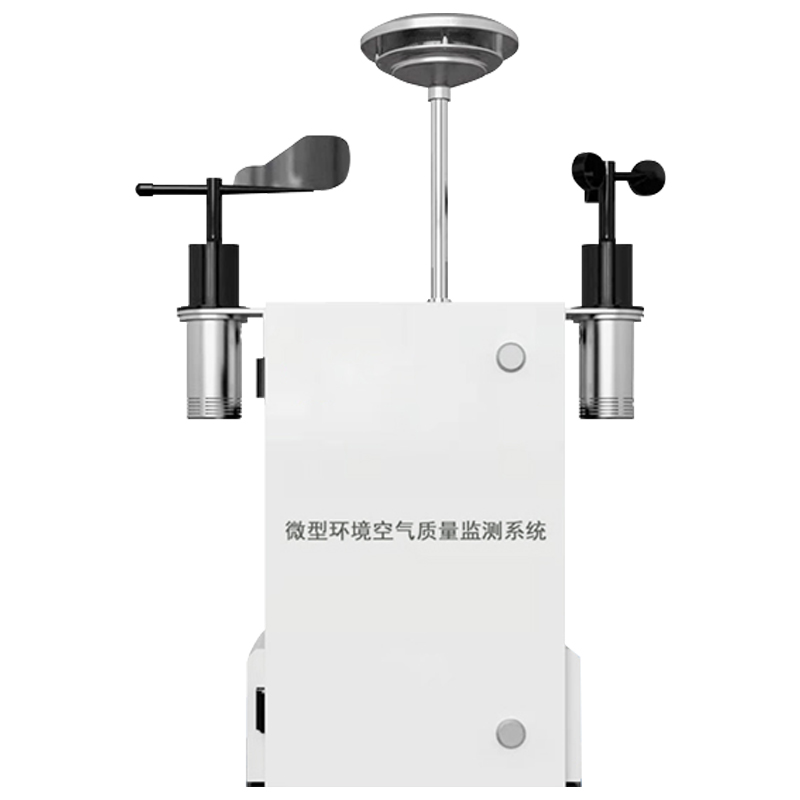
outdoor Weather Station features a handle, power supply, display screen, and wireless transmission module. It integrates three core technologies: ultrasonic sensing, multi-module integration, and smart IoT, making it suitable for various emergency short-term meteorological observations and mob...
Expressways, as the main arteries of transportation, are crucial for the movement of people and the transportation of goods. However, severe weather such as heavy rain, heavy snow, dense fog, and strong winds frequently disrupts the operation of expressways, posing challenges to traffic order and tr...
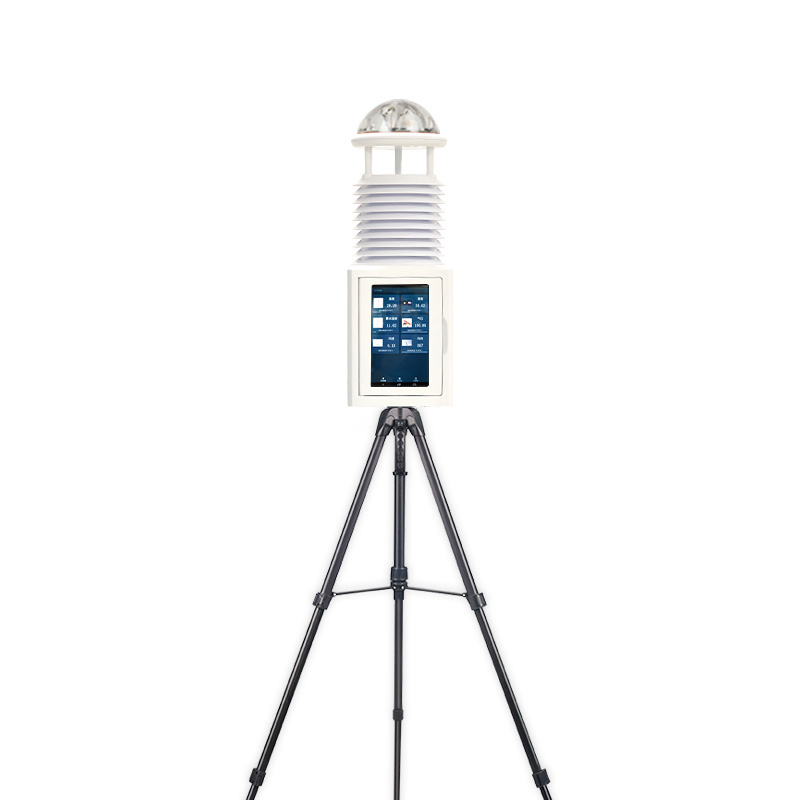
Field Weather Instrument is a highly integrated, low-power, and portable meteorological station. Featuring a carbon fiber main support structure, it integrates a meteorological sensor unit, a compass, a tablet computer, and a field shovel within a single wheeled trolley case. This design enabl...
The construction of smart wetlands takes wetland monitoring equipment as the core, and combines Internet of Things (IoT), big data, and artificial intelligence technologies to build a three-dimensional monitoring network covering hydrology, meteorology, and ecology.The wetland weather stations...


 Skype
Skype
 whatsapp
 mail
mail