Tianqiong Sensor IOT Technology Co., Ltd
Sales Manager:Ms. Emily Wang
Cel,Whatsapp,Wechat:+86 15898932201
Email:info@fengtutec.com
Add:No. 155 Optoelectronic Industry Accelerator, Gaoxin District, Weifang, Shandong, China


Sales Manager:Ms. Emily Wang
Cel,Whatsapp,Wechat:+86 15898932201
Email:info@fengtutec.com
Add:No. 155 Optoelectronic Industry Accelerator, Gaoxin District, Weifang, Shandong, China
time:2025-08-12 09:07:39 source:Weather Station viewed:515 time
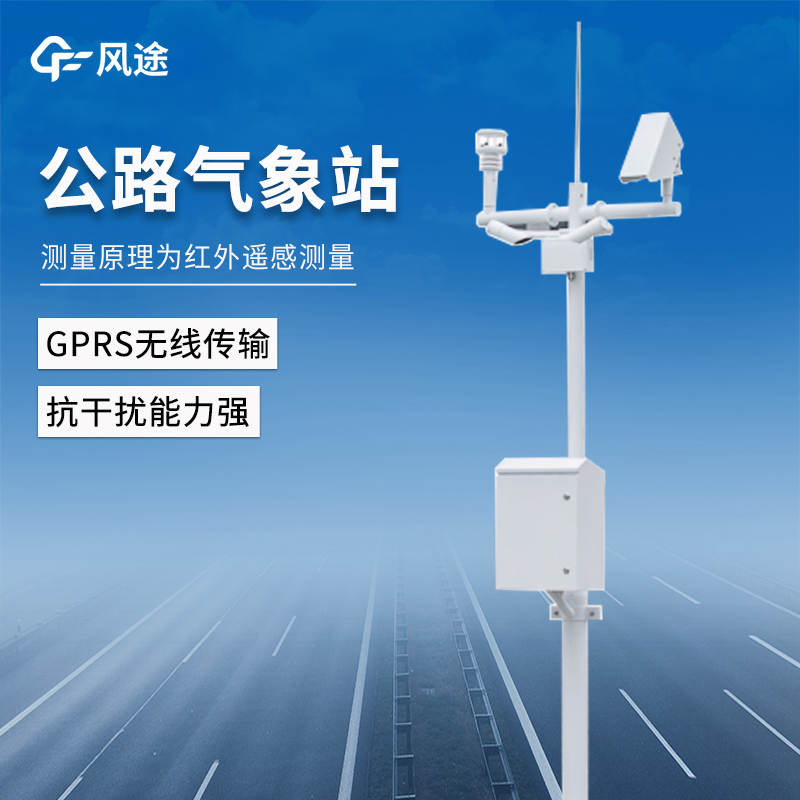
Expressways, as the main arteries of transportation, are crucial for the movement of people and the transportation of goods. However, severe weather such as heavy rain, heavy snow, dense fog, and strong winds frequently disrupts the operation of expressways, posing challenges to traffic order and travel safety. To address these issues, the Road Weather Information System has become a solid line of defense for ensuring road safety.
The system consists of meteorological data collection equipment, a data transmission network, a data analysis and processing center, and an early warning information release platform. The meteorological data collection equipment, composed of various precision sensors, is installed in key areas along the expressway, such as bridge and tunnel entrances and exits, wind outlets, and sections prone to fog clusters. These sensors have clear divisions of labor and can accurately monitor meteorological elements such as temperature, humidity, rainfall, wind speed, wind direction, visibility, as well as road surface dryness, wetness, and icing conditions. For example, visibility sensors use optical principles to accurately obtain visibility values by measuring the scattering degree of light in the atmosphere; road condition sensors, on the other hand, use microwave detection technology to real-time measure whether there is water accumulation, icing, or snow cover on the road surface.
The collected meteorological data is transmitted to the data analysis and processing center in a high-speed and stable manner through the data transmission network. This network, like an information superhighway, guarantees the rapid and accurate transmission of data. The data analysis and processing center, as the "intelligent brain" of the system, uses complex algorithms and advanced models to conduct in-depth analysis of massive meteorological data. On the one hand, it compares real-time data with historical data and preset threshold data to determine whether the current meteorological conditions are severe and their degree; on the other hand, it uses numerical weather prediction technology and machine learning algorithms to predict the development trends of severe meteorological conditions, such as future changes in intensity, movement direction, and scope of influence.
When the system judges that severe weather is occurring or approaching, the early warning information release platform comes into play. This platform quickly transmits early warning information to expressway management departments, traffic police, road administration, and passing drivers through various channels such as variable message signs along the expressway, traffic radio, mobile phone short messages, and navigation APP prompts. Drivers can timely receive early warnings of severe weather on the road ahead through on-board navigation or mobile phone navigation APPs, thereby making preparations in advance such as slowing down and turning on fog lights; expressway management departments and traffic police, based on the early warning information, can deploy traffic control measures in advance, arrange snow and ice removal, drainage and other operations, and make every effort to ensure the safety and smooth flow of the road.
Online ORP Meter is an instrument capable of real-time online monitoring of oxidation-reduction potential (ORP) in water, also known as an online oxidation-reduction potential analyzer. It is widely used in industrial and laboratory fields, allowing for rapid detection of ORP values. It is suitable for on-site testing or continuous real-time monitoring of surface water, tap water, etc. Its main applications include water treatment plants, water supply networks, swimming pools, cooling water systems, and various water treatment projects....
Negative Oxygen Ion Monitoring Station FT-FZ1 is an environmental monitoring device used to measure and display the concentration of negative oxygen ions in the air.The function of FT-FZ1 is to automatically monitor the concentration of negative oxygen ions in the air around the clock. Negative oxyg...
Expressways, as the main arteries of transportation, are crucial for the movement of people and the transportation of goods. However, severe weather such as heavy rain, heavy snow, dense fog, and strong winds frequently disrupts the operation of expressways, posing challenges to traffic order and tr...
In today's society, the importance of environmental monitoring is increasingly prominent. The efficient operation of fields such as weather forecasting for travel protection, agricultural production for crop planting adjustment, urban planning with climate considerations, and traffic management...


 Skype
Skype
 whatsapp
 mail
mail