Tianqiong Sensor IOT Technology Co., Ltd
Sales Manager:Ms. Emily Wang
Cel,Whatsapp,Wechat:+86 15898932201
Email:info@fengtutec.com
Add:No. 155 Optoelectronic Industry Accelerator, Gaoxin District, Weifang, Shandong, China


Sales Manager:Ms. Emily Wang
Cel,Whatsapp,Wechat:+86 15898932201
Email:info@fengtutec.com
Add:No. 155 Optoelectronic Industry Accelerator, Gaoxin District, Weifang, Shandong, China
time:2026-03-25 11:37:46 source:Weather Station viewed:205 time
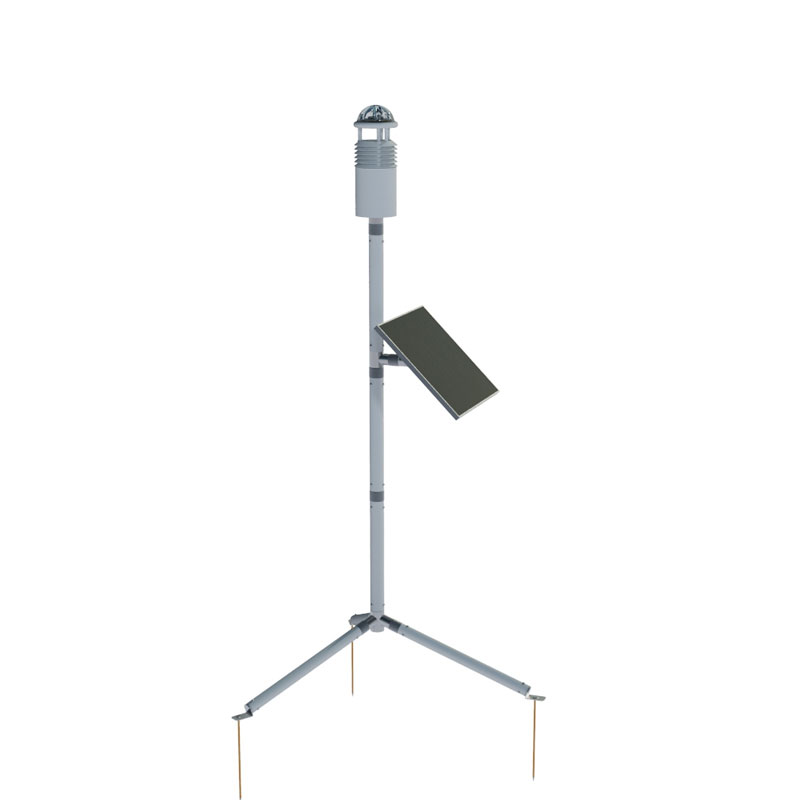
Field Weather Instrument is a highly integrated, low-power, and portable meteorological station. Featuring a carbon fiber main support structure, it integrates a meteorological sensor unit, a compass, a tablet computer, and a field shovel within a single wheeled trolley case. This design enables the real-time observation of various meteorological parameters, making it ideally suited for field-based emergency and mobile monitoring applications.
Field Weather Instrument is a high-precision portable meteorological station specifically engineered for mobile field monitoring scenarios. Its core characteristics include high integration, low power consumption, and rapid installation capabilities. The device's main support structure is constructed from carbon fiber—a material that weighs approximately one-quarter as much as steel while possessing five times the tensile strength. This choice of material significantly reduces the overall weight of the unit while maintaining structural rigidity, thereby facilitating easy single-person transport and rapid deployment.
This product consolidates four essential tools—the portable meteorological station, a compass, a tablet computer, and a field shovel—into a single wheeled trolley case. The trolley case design allows the device to be wheeled directly during transport, thereby minimizing the physical burden of carrying the equipment. The interior of the case features custom-molded foam inserts that securely anchor each component in its designated position; consequently, the meteorological station can be fully assembled and erected immediately upon opening the case, requiring no additional tools. The included tablet computer serves as the data display and storage terminal; pre-loaded with dedicated software, it receives data collected by the meteorological station via either wired or wireless connections, enabling real-time on-site monitoring as well as the recording of historical data. The compass assists in determining the directional orientation of the observation site, while the field shovel can be utilized for site leveling, securing ground anchors, or performing temporary excavation tasks, thereby meeting the specific setup requirements of infrastructure-free field environments.
In terms of measurement capabilities, Field Weather Instrument enables the real-time observation of a comprehensive range of meteorological and environmental parameters, including wind speed, wind direction, temperature, humidity, atmospheric pressure, light intensity, optical precipitation levels, PM2.5 and PM10 particulate matter concentrations, and noise levels. Wind speed and direction are measured using either ultrasonic or mechanical sensors, featuring no startup wind speed threshold and capable of capturing instantaneous wind speed fluctuations. Sensors for temperature, humidity, and atmospheric pressure are integrated within a protective housing, ensuring rapid response times. The optical rain gauge measures rainfall intensity based on the principle of infrared light occlusion; devoid of mechanical tipping-bucket components, it is ideally suited for use in mobile applications. The particulate matter sensor employs a light-scattering method to provide real-time output of PM2.5 and PM10 concentration values, while the noise sensor captures ambient sound pressure levels to assess on-site noise conditions.
The sensor housing is constructed from imported ABS material, offering robust resistance to salt-spray corrosion. With an ingress protection rating exceeding IP65, the unit is dustproof and capable of withstanding low-pressure water jets, making it well-adapted to complex outdoor environments characterized by coastal conditions, high humidity, or heavy dust. The device features a low-power design and is powered by either a built-in rechargeable battery or an external solar panel; a single charge supports several days of continuous operation, thereby meeting the endurance requirements for short-term emergency meteorological observations.
The Field Weather Instrument system is primarily designed for outdoor meteorological monitoring, making it suitable for scenarios such as short-term emergency weather observation and mobile meteorological surveillance. During critical missions—including disaster relief operations, major event support, military exercises, and outdoor scientific expeditions—the device can be fully deployed and begin data acquisition within minutes of arriving on-site, providing real-time meteorological intelligence to on-site command personnel. Observation data can be transmitted wirelessly to a remote command center, enabling the simultaneous and synchronized sharing of meteorological updates between forward operational units and rear support bases.
In the field of meteorological monitoring, traditional monitoring methods have limitations in specific geographical environments. Ground-based equipment is restricted by terrain and difficult to achieve comprehensive coverage; while satellites can provide macro-level monitoring, they lack precision...
The River Flow Monitoring System is mainly used for remotely grasping the real-time hydrological conditions of various water areas, including natural rivers, artificial canals, and landscape watercourses. It assists relevant authorities in promptly recording the dynamic changes of river water source...
Ultrasonic weather station uses non-contact sensing technology to accurately monitor weather conditions and leverages 4G wireless transmission to provide borderless data services for smart agriculture....
With the acceleration of urbanization, dust pollution from construction sites has become increasingly severe. It not only impairs urban air quality but also poses a threat to residents' health. To efficiently monitor and control this issue, the Dust Detector system has been developed by leveragi...


 Skype
Skype
 whatsapp
 mail
mail