Tianqiong Sensor IOT Technology Co., Ltd
Sales Manager:Ms. Emily Wang
Cel,Whatsapp,Wechat:+86 15898932201
Email:info@fengtutec.com
Add:No. 155 Optoelectronic Industry Accelerator, Gaoxin District, Weifang, Shandong, China


Sales Manager:Ms. Emily Wang
Cel,Whatsapp,Wechat:+86 15898932201
Email:info@fengtutec.com
Add:No. 155 Optoelectronic Industry Accelerator, Gaoxin District, Weifang, Shandong, China
time:2025-10-28 08:59:47 source:Weather Station viewed:440 time
As environmental pollution becomes increasingly complex, the limitations of traditional air monitoring methods are gradually becoming apparent. The national ambient air monitoring network has a limited number of stations and high costs, and the method of using points to represent the whole area results in insufficient timeliness, failing to achieve refined management goals.
An air quality monitoring station is a sophisticated air quality management network system that covers an area through high-density deployment of low-cost miniature monitoring devices. It has become an important technical means in current environmental governance.
Compared with traditional national control points, grid-based monitoring offers two major advantages:
Significantly reduced investment costs: Each grid-based miniature monitoring device costs approximately 100,000 yuan on average, far lower than the several million yuan investment required for traditional national control points, making it suitable for large-scale, high-density deployment.
Significantly reduced operational costs: The miniature instruments are simple to maintain, with operating costs far lower than national control points, providing economic guarantee for long-term stable operation.
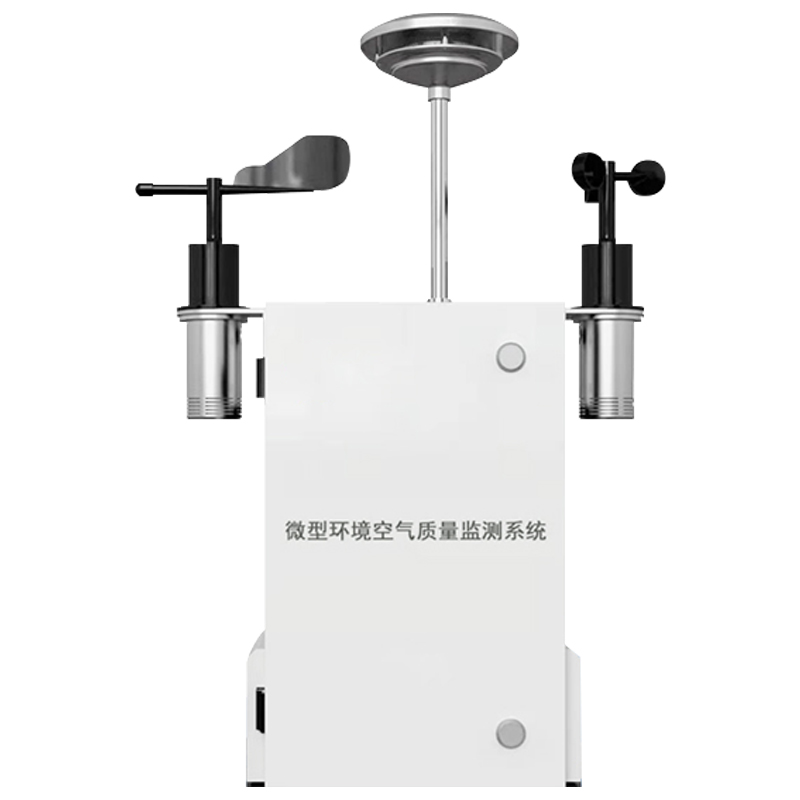
Meteorological station manufacturer FengTu provides a variety of grid-based environmental monitoring equipment to meet different scenario requirements. The main models include FT-WZ01, FT-WQX12, and FT-CQX12.
The FT-WZ01 model is a multi-functional monitoring station capable of simultaneously monitoring a total of 13 parameters including the "four gases" (carbon monoxide, sulfur dioxide, nitrogen dioxide, ozone), "two particles" (PM2.5, PM10), and five meteorological parameters (temperature, humidity, wind speed, wind direction, atmospheric pressure), with optional TVOC monitoring. The device supports multiple power supply methods combining solar energy, lithium batteries, and municipal electricity, ensuring continuous operation in remote areas or areas without municipal electricity. It also features remote calibration and upgrade functions for convenient operation and maintenance.
The FT-WQX12 model integrates 12 monitoring parameters, adding optical rainfall monitoring to conventional pollutants and meteorological elements. The concealed ultrasonic probe design effectively avoids interference from rain and snow accumulation on wind speed and direction measurements, achieving maintenance-free operation and eliminating the need for on-site calibration, greatly reducing operational costs.
The FT-CQX12 model also supports 12-parameter monitoring with highly integrated meteorological and environmental sensors. The design focuses on low power consumption and high integration, facilitating quick installation and long-term field monitoring. It supports multiple data transmission methods including 4G and Ethernet, providing wide adaptability.
In addition to hardware equipment, FengTu also provides a data analysis platform that serves as the "brain" of the entire system. Through a web interface and mobile app, the platform offers real-time data visualization, GIS map display, historical data tracking and analysis, and other functions. The platform features automatic pollution event monitoring and alarm mechanisms, capable of promptly pushing early warning information through multiple channels. Through in-depth analysis of massive monitoring data, the platform can also identify key areas with excessive pollution and potential pollution sources, providing accurate decision support for environmental managers.
As a device widely used in fields such as water conservancy monitoring, environmental governance, and engineering construction, a flow meter can monitor water flow velocity data in real time with high accuracy, providing a scientific basis for decision-making. Currently, mainstream flow meters on th...
weather monitoring system is an unattended meteorological data acquisition system that uses ultrasonic principles to measure wind speed and direction. This system integrates data acquisition, storage, and transmission functions, featuring a compact structure and easy installation....
In the fields of meteorological monitoring and hydrology, the piezoelectric rain gauge and the Radar Precipitation Sensor Rain Gauge Distrometer are commonly used rainfall monitoring devices. Today, the author will compare the differences between the two.The piezoelectric rain gauge works by u...
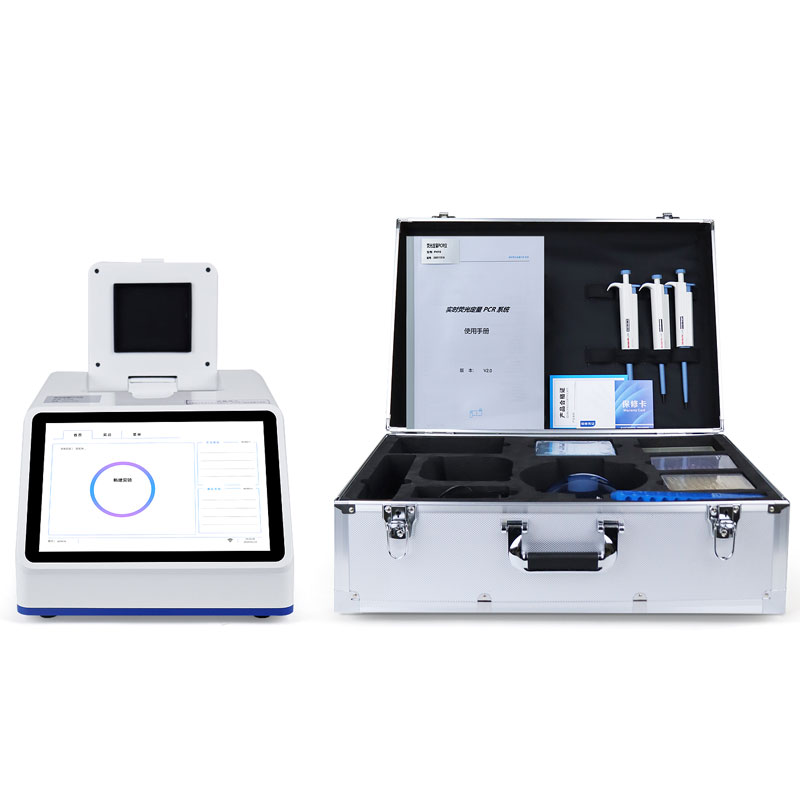
Real Time PCR is a high-precision instrument for real-time monitoring of the PCR amplification process, featuring an 8-well single-channel design. By combining PCR amplification and fluorescence detection technology, it enables rapid and accurate quantitative analysis of nucleic acid targets,...


 Skype
Skype
 whatsapp
 mail
mail