Tianqiong Sensor IOT Technology Co., Ltd
Sales Manager:Ms. Emily Wang
Cel,Whatsapp,Wechat:+86 15898932201
Email:info@fengtutec.com
Add:No. 155 Optoelectronic Industry Accelerator, Gaoxin District, Weifang, Shandong, China


Sales Manager:Ms. Emily Wang
Cel,Whatsapp,Wechat:+86 15898932201
Email:info@fengtutec.com
Add:No. 155 Optoelectronic Industry Accelerator, Gaoxin District, Weifang, Shandong, China
time:2025-06-12 08:59:28 source:Weather Station viewed:540 time
In traditional cognition, agricultural production has often "relied on the weather", and weather changes have a huge impact on crop growth. Especially during the Sanfu days (the peak summer heat period), extreme weather such as high temperatures, high humidity, and heavy rainfall occurs frequently, posing many challenges to agricultural production. Today, agrometeorological stations, as a key "black technology", are helping agriculture precisely tackle the "heat challenges" and effectively reduce the adverse effects of meteorological disasters on agriculture.
Composition and Functions of Agrometeorological Stations
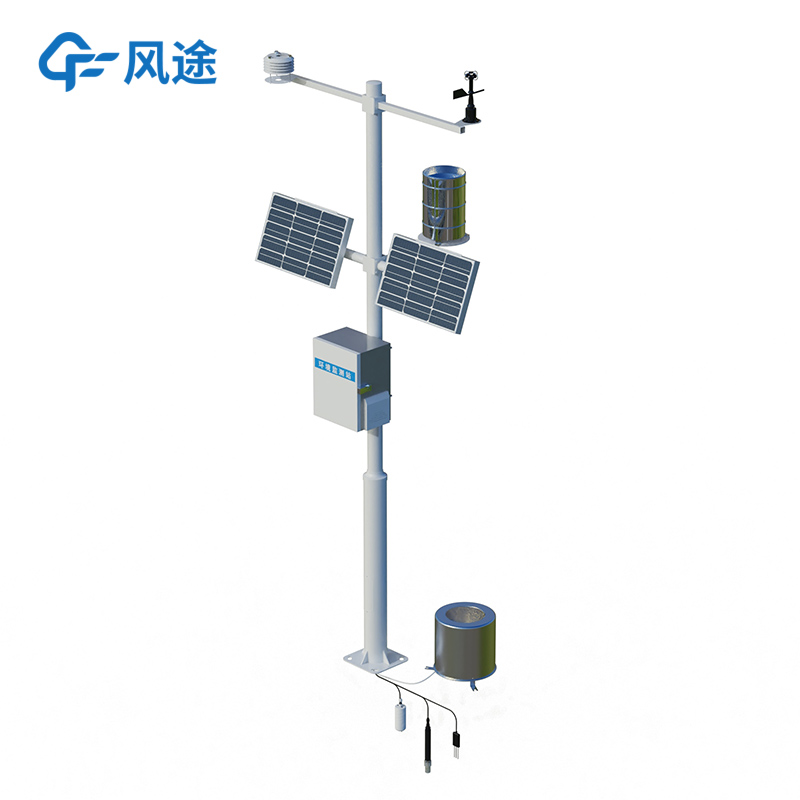
Agrometeorological stations consist of meteorological sensors, data collectors, system power supplies, communication interfaces, and peripheral devices. Meteorological sensors are the core components:
Temperature sensors accurately measure air and soil temperatures, allowing farmers to promptly grasp temperature changes during the Sanfu days. When temperatures are too high, they can take pre-emptive cooling measures for crops, such as setting up sunshade nets.
Humidity sensors monitor air and soil moisture in real time, preventing crop diseases, insect pests, or root damage caused by abnormal humidity.
Wind speed and direction sensors detect wind force and direction, providing early warnings for strong winds so farmers can reinforce agricultural facilities.
Rainfall sensors accurately record precipitation, providing a basis for rational irrigation and drainage to prevent waterlogging or drought.
Support Systems of the Stations
Data collectors gather data from sensors, perform preliminary processing, and store information.
System power supplies can use mains electricity, solar energy, or a combination, ensuring stable operation in different environments—even during power outages in the Sanfu days.
Communication interfaces transmit processed data to user terminals (e.g., computers, mobile phones). Farmers can view meteorological data anytime, anywhere through related software or platforms.
Application in the Sanfu Days
In short, during the high-temperature Sanfu period:
Farmers arrange irrigation times reasonably based on temperature data to avoid root damage from watering during extreme heat.
They adjust humidity in greenhouses using moisture data to prevent diseases.
By leveraging wind and rainfall data, they prepare in advance for wind and flood control, minimizing losses from extreme weather.
Wheat seedling conditions are usually classified into strong seedlings, robust seedlings (including first - class and second - class seedlings), and weak seedlings (third - class seedlings). For different seedling conditions, differential management measures need to be taken during key growth stages...
Water is the lifeblood of plant growth, permeating throughout their entire life cycle. Plants mainly rely on their roots to absorb water, and this water participates in numerous physiological activities within the plant.Photosynthesis is the core process of plant growth. Water and carbon dioxide und...
In traditional cognition, agricultural production has often "relied on the weather", and weather changes have a huge impact on crop growth. Especially during the Sanfu days (the peak summer heat period), extreme weather such as high temperatures, high humidity, and heavy rainfall occurs fr...
With the acceleration of urbanization and industrialization, regional and complex air pollution problems have become increasingly prominent. Traditional ambient air quality monitoring networks typically consist of a limited number of well-equipped national or provincial control stations. While these...


 Skype
Skype
 whatsapp
 mail
mail