Tianqiong Sensor IOT Technology Co., Ltd
Sales Manager:Ms. Emily Wang
Cel,Whatsapp,Wechat:+86 15898932201
Email:info@fengtutec.com
Add:No. 155 Optoelectronic Industry Accelerator, Gaoxin District, Weifang, Shandong, China


Sales Manager:Ms. Emily Wang
Cel,Whatsapp,Wechat:+86 15898932201
Email:info@fengtutec.com
Add:No. 155 Optoelectronic Industry Accelerator, Gaoxin District, Weifang, Shandong, China
time:2026-05-07 10:48:57 source:Weather Station viewed:6 time
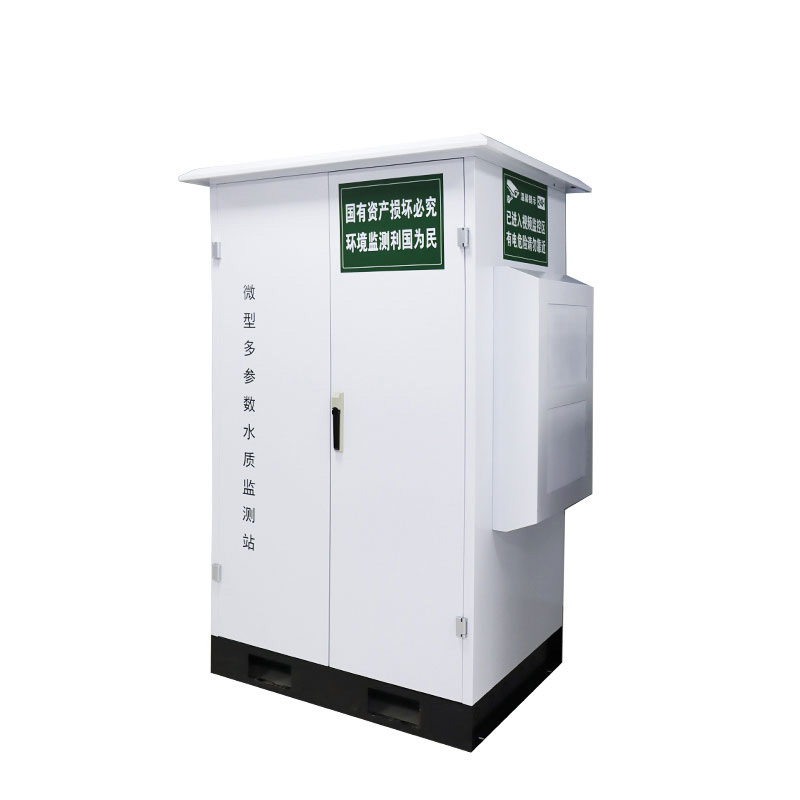
The price of water quality online monitoring micro-stations varies significantly depending on their parameter configuration. Products in the 200,000 RMB price range feature complete integrated units—including water sampling and distribution, detection, and quality control modules—and utilize national-standard chemical methods to monitor key indicators such as Total Phosphorus, Total Nitrogen, and COD. These units are ideally suited for fixed monitoring points, such as surface water bodies and sewage discharge outlets.
The cost of water quality online monitoring micro-stations varies substantially based on the number and precision of the monitoring parameters included. Basic-model micro-stations, which monitor only the five standard parameters (Dissolved Oxygen, Conductivity, Turbidity, Temperature, and pH), typically retail within the 50,000 to 100,000 RMB range. However, in actual procurement scenarios, users may encounter quoted prices ranging anywhere from 12,000 RMB to 250,000 RMB. A water quality monitoring microsystem priced at 12,000 RMB serves as a useful reference point; its monitoring scope covers multiple parameters—including pH, temperature, turbidity, conductivity, dissolved oxygen, COD, ammonia nitrogen, suspended solids, and total nitrogen—making it suitable for the online monitoring of water quality in rivers and municipal water supply networks. A model priced at 55,000 RMB is designed for installation in locations such as river channels and reservoirs to facilitate automated surface water monitoring. Once the price point enters the 200,000 RMB range, the equipment's configuration undergoes a distinct upgrade. The recommended retail price for this advanced online automated water quality micro-station—Model FT-WMSM—is 200,000 RMB, with physical dimensions measuring 1900 mm × 1480 mm × 960 mm.
Water quality online monitoring micro-stations in the 200,000 RMB price bracket employ an integrated design principle; their comprehensive composition includes a water sampling and distribution system, a detection unit, a quality control unit, and various auxiliary units. The core component is the detection unit, where the analysis of key indicators—such as Total Phosphorus, Total Nitrogen, Chemical Oxygen Demand (COD), Permanganate Index, and Ammonia Nitrogen—strictly adheres to the chemical analysis methods prescribed by national standards, thereby ensuring the credibility and reliability of the monitoring results. The five standard parameters are measured using an integrated multi-electrode array. Priced at 200,000 RMB, Model FT-WMSM utilizes a multi-parameter fusion measurement technology that combines electrochemical and optical methods. It supports the continuous and precise monitoring of numerous critical water quality indicators—including pH, conductivity, dissolved oxygen, turbidity, COD, ammonium ions, chlorophyll, and blue-green algae—and features a system-integrated automated pretreatment function capable of performing sedimentation, mixing, timed sampling, and self-cleaning operations. Within the price range of 200,000 to 250,000 RMB, the compact water quality monitoring micro-station offers comprehensive functionality and a high degree of automation. Utilizing a modular design, the micro-station allows for flexible configuration of various parameter combinations to suit specific monitoring requirements, and supports both wired and wireless data transmission methods. It features a short installation cycle and a minimal footprint; it can be rapidly deployed without the need for constructing a dedicated station housing, and is easily relocated to different sites. The device is equipped with a built-in storage module capable of retaining historical data ranging from several months to several years, and supports a data补传 (catch-up transmission) function to ensure no data is lost during network outages. Furthermore, an alarm system for threshold exceedances provides real-time notifications to management personnel—via platform push notifications, SMS, and other channels—whenever monitoring data surpasses pre-set limits. Unlike portable handheld testing devices, the micro-station requires minimal manual intervention once deployed, as data is automatically collected, stored, and uploaded. The detection unit's transmitter is capable of simultaneously interfacing with various modules—such as pH and temperature sensors—and employs high-precision detection protocols to facilitate the collaborative operation of these distinct modules and sensors, thereby ensuring data stability throughout the device's long-term operation.
The mobility and dynamic changes of pollution sources have always been prominent challenges. The traditional model of manually tracing pollution sources and analyzing pollution characteristics not only consumes substantial time and human resources but also yields data lacking accuracy due to issues...
China has a vast territory with complex and diverse geographical environments and significant differences in climatic conditions. As a crucial link for power transmission, transmission lines inevitably traverse special geographical areas such as valleys, high - altitude peaks, and rivers. These spec...
The Portable el detector is an important device used to detect various defects in photovoltaic (PV) cell modules. It can accurately detect defects such as hidden cracks, fragments, and poor soldering in PV cell modules. These internal defects can seriously affect the service life and long-term power...
In modern traffic management, real-time and accurate road condition monitoring is of great significance for ensuring driving safety and improving road operation efficiency. Traditional road weather stations typically require embedded installation, which not only damages the road structure but may al...


 Skype
Skype
 whatsapp
 mail
mail