Tianqiong Sensor IOT Technology Co., Ltd
Sales Manager:Ms. Emily Wang
Cel,Whatsapp,Wechat:+86 15898932201
Email:info@fengtutec.com
Add:No. 155 Optoelectronic Industry Accelerator, Gaoxin District, Weifang, Shandong, China


Sales Manager:Ms. Emily Wang
Cel,Whatsapp,Wechat:+86 15898932201
Email:info@fengtutec.com
Add:No. 155 Optoelectronic Industry Accelerator, Gaoxin District, Weifang, Shandong, China
time:2025-10-23 08:56:00 source:Weather Station viewed:409 time
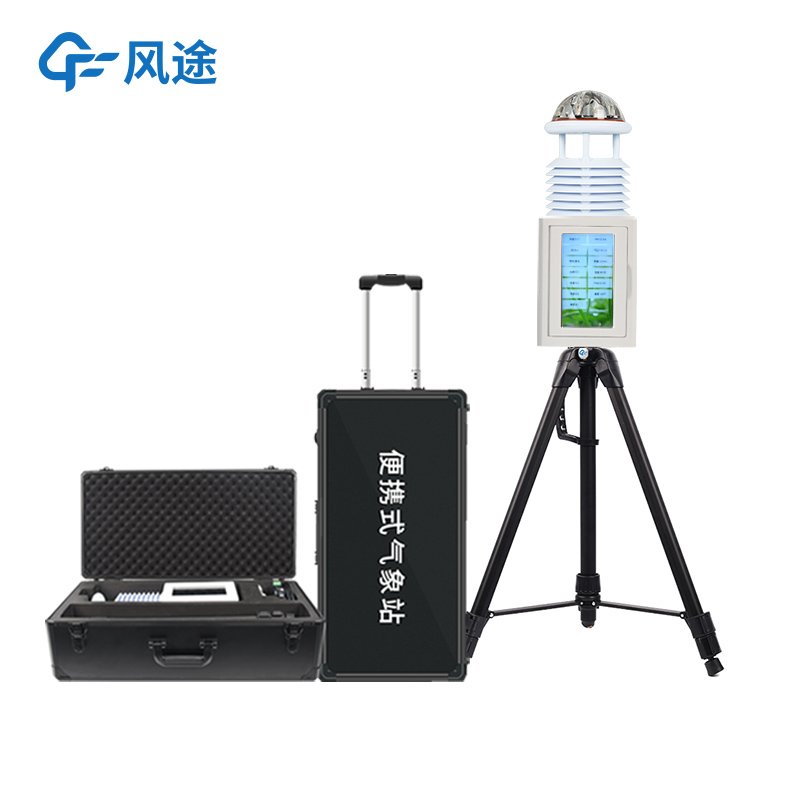
A Cellular Weather Station is a highly integrated, portable meteorological observation device capable of real-time monitoring of multiple environmental and meteorological parameters, providing flexible data support for field monitoring, emergency response, scientific research, education, and other fields.
The development of Cellular Weather Stations was primarily aimed at overcoming the limitations of traditional large-scale weather stations, which occupy large areas and are difficult to move. They fill the gap for rapid acquisition of meteorological data in emergency response to sudden incidents, field scientific expeditions, and refined monitoring tasks in specific small areas.
The equipment integrates high-precision ultrasonic or digital sensors, enabling real-time monitoring of multiple meteorological elements including wind speed, wind direction, air temperature, humidity, atmospheric pressure, illumination, and PM2.5. Data transmission supports multiple wireless methods such as 4G, Bluetooth, and GPRS. Measurement data can be uploaded to cloud platforms in real-time, allowing users to remotely view data and receive alarm information via mobile phones or computers, achieving intelligent and remote monitoring.
Currently, Cellular Weather Stations have been widely applied in numerous fields:
They can be used for on-site monitoring and temporary networking during various environmental emergencies or severe weather events.
They help farmers monitor microclimates inside greenhouses, and through linkage with ventilation and other equipment, effectively regulate the environment, reduce disease risks, and improve crop quality and yield.
They also serve as powerful tools for meteorological data acquisition and teaching demonstrations in scientific research, education, airports, ports, and other scenarios.
Rainwater conditions refer to the real-time status and changing trends of hydrological elements such as precipitation, water level, and flow. They are the core basis for water resource management and disaster prevention and mitigation. Precipitation replenishes surface and groundwater sources in the...
FT-FY1 Model Negative Ion Detector is a high-precision professional instrument for air negative ion detection and analysis. Regarded as a preferred tool for real-time measurement of atmospheric negative oxygen ion concentration, it is widely used in various fields including environmental monitoring,...
In the field of meteorological monitoring, traditional monitoring methods have limitations in specific geographical environments. Ground-based equipment is restricted by terrain and difficult to achieve comprehensive coverage; while satellites can provide macro-level monitoring, they lack precision...
In traditional agricultural production, there has always been a problem of lag in crop disease prevention and control. Farmers mainly rely on experience to judge diseases, and by the time obvious symptoms appear in the field, certain losses have often been caused. Blind use of pesticides is also com...


 Skype
Skype
 whatsapp
 mail
mail