Tianqiong Sensor IOT Technology Co., Ltd
Sales Manager:Ms. Emily Wang
Cel,Whatsapp,Wechat:+86 15898932201
Email:info@fengtutec.com
Add:No. 155 Optoelectronic Industry Accelerator, Gaoxin District, Weifang, Shandong, China


Sales Manager:Ms. Emily Wang
Cel,Whatsapp,Wechat:+86 15898932201
Email:info@fengtutec.com
Add:No. 155 Optoelectronic Industry Accelerator, Gaoxin District, Weifang, Shandong, China
time:2025-09-24 09:10:17 source:Weather Station viewed:422 time
Many critical defects in solar cells, such as tiny microcracks, are completely hidden inside the cells and cannot be detected by the naked eye or even ordinary cameras. These defects can seriously affect the power generation efficiency and lifespan of the modules. Therefore, EL (Electroluminescence) camera detectors are deployed to ensure component quality control.
The working principle of an EL detector is based on the electroluminescence effect. Simply put, it reverses the operation of a solar cell: when a forward bias voltage is applied to the photovoltaic module and current is injected, electrons inside the cell undergo energy level transitions, thereby releasing photons mainly in the near-infrared spectrum (wavelength approximately 1000-1100 nanometers). In defective areas, the resistance is higher or recombination is stronger, resulting in weaker light emission. After a high-sensitivity infrared camera captures these light differences, on the image, normal areas appear bright while defective areas appear as dark shadows, making internal defects clearly visible.
It can be said that EL detectors are used throughout the entire lifecycle of photovoltaic modules. They perform random inspections after key processes such as lamination and framing, promptly removing defective products and ensuring quality control from the source. During power station construction acceptance and regular maintenance, they are used to detect microcracks generated during transportation and installation of modules, or to identify issues such as hot spots and PID (Potential Induced Degradation) attenuation that cause reduced power generation, ensuring the safety and profitability of power stations.
Today, highly integrated and lightweight portable EL detectors have become the market mainstream, and can even be mounted on drones to achieve efficient inspection of large-scale photovoltaic power stations. Combined with artificial intelligence image recognition algorithms, they can automatically identify and classify defects and generate detailed inspection reports, greatly improving the objectivity and efficiency of detection.
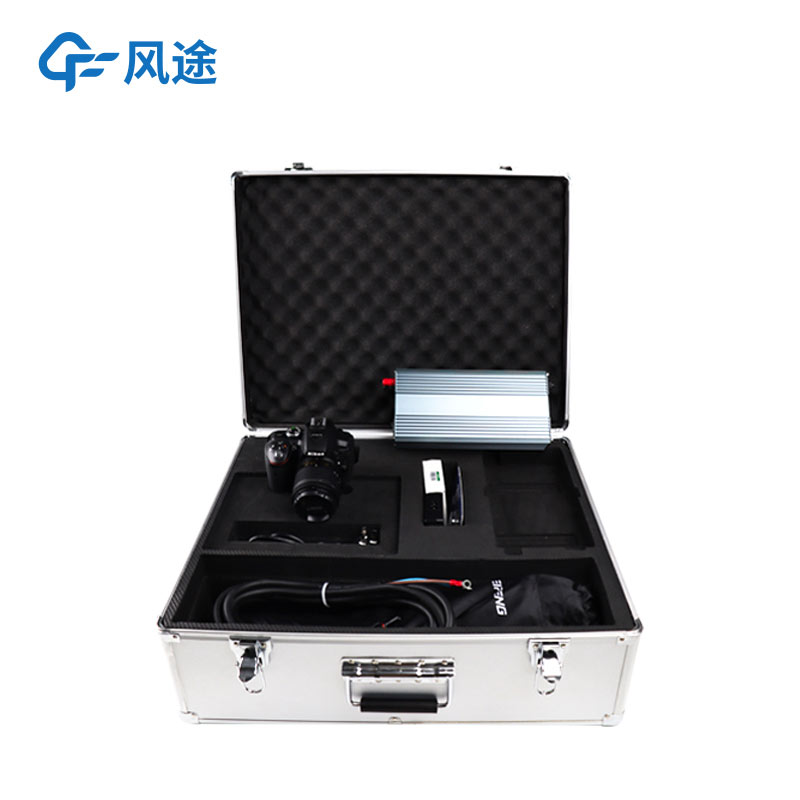
The Portable el detector is an important device used to detect various defects in photovoltaic (PV) cell modules. It can accurately detect defects such as hidden cracks, fragments, and poor soldering in PV cell modules. These internal defects can seriously affect the service life and long-term power...
In scenarios such as ventilation and air conditioning systems and industrial pipeline exhaust, the air velocity in the air duct is an important parameter for measuring the operating status of the system. When the air velocity is too high, it may lead to increased energy consumption, greater pipeline...
Soil moisture automatic measurement relies on multiple sensor technologies. For soil water content measurement, Frequency Domain Reflectometry (FDR) and Time Domain Reflectometry (TDR) are commonly used. FDR sensors calculate water content by measuring the soil's dielectric constant, as there is...
Currently, the situation of urban atmospheric pollution is becoming increasingly complex, and traditional methods for monitoring atmospheric pollution sources are facing numerous challenges. The existing national control monitoring system for ambient air has problems such as a small number of monito...


 Skype
Skype
 whatsapp
 mail
mail