Tianqiong Sensor IOT Technology Co., Ltd
Sales Manager:Ms. Emily Wang
Cel,Whatsapp,Wechat:+86 15898932201
Email:info@fengtutec.com
Add:No. 155 Optoelectronic Industry Accelerator, Gaoxin District, Weifang, Shandong, China


Sales Manager:Ms. Emily Wang
Cel,Whatsapp,Wechat:+86 15898932201
Email:info@fengtutec.com
Add:No. 155 Optoelectronic Industry Accelerator, Gaoxin District, Weifang, Shandong, China
time:2025-08-26 09:05:36 source:Weather Station viewed:437 time
Negative oxygen ions are negatively charged particles formed when oxygen molecules combine with free electrons through natural processes. Known as the "air freshening factor", they not only purify the air but also regulate human health. They can adsorb dust and odor molecules, and improve the physiological state of the human body.
The Negative Oxygen Ion Monitoring Station is designed for long-term monitoring in complex environments. Its core adopts the world-leading coaxial double-cylinder technology and has three major advantages: first, it has strong measurement stability and can cope with outdoor environmental fluctuations for continuous monitoring; second, it has a fast response speed; third, it provides accurate data, which offers reliable support for subsequent analysis.
The system has outstanding resistance to electromagnetic interference, electrostatic interference, and electromagnetic wave interference. It has high sensitivity to small-sized negative oxygen ions, and features stable communication and high humidity resistance. It can operate continuously for a long time in remote outdoor areas and under severe weather conditions.
Given that the content of negative oxygen ions is significantly affected by weather due to the changeable outdoor environment, single-item monitoring is difficult to meet the needs. Users can expand meteorological sensors as required to realize real-time monitoring of multiple parameters, including air temperature and humidity, wind speed, wind direction, carbon dioxide, atmospheric pressure, illumination, rain and snow status, ultraviolet rays, total radiation, carbon monoxide, and ozone. This helps build a comprehensive monitoring system.
In terms of data transmission and management, the system relies on IoT (Internet of Things) technologies such as RS485, Ethernet, and 4G, and combines with the environmental monitoring cloud platform to form an intelligent monitoring system. Users can log in to the cloud platform via mobile phones or computers to remotely view data and manage equipment, thereby improving monitoring efficiency.
In practical applications, the system can demonstrate the achievements of ecological construction in areas such as forest areas and scenic spots, intuitively reflect air quality, and at the same time provide data support for environmental assessment and policy formulation by government departments.
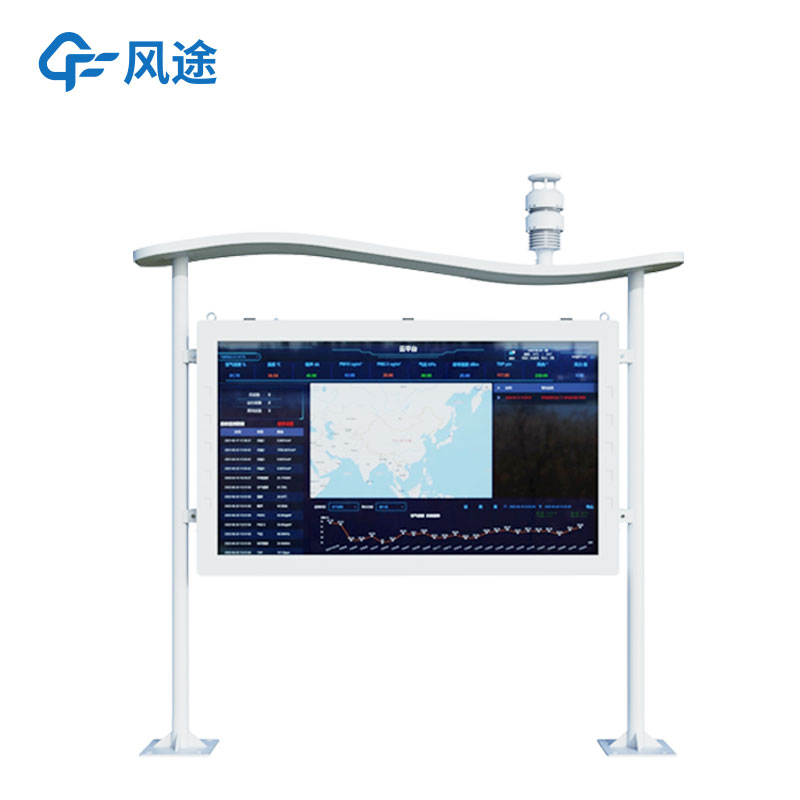
Negative Oxygen Ion Monitoring Station FT-FZ1 is an environmental monitoring device used to measure and display the concentration of negative oxygen ions in the air.The function of FT-FZ1 is to automatically monitor the concentration of negative oxygen ions in the air around the clock. Negative oxyg...
The EL series of DC power supply is an important equipment in the testing link of the photovoltaic industry.It is specially used to provide power support for EL (Electroluminescence) testing of photovoltaic modules. In the production process of photovoltaic modules, EL testing is a key means to dete...
The Atmospheric Visibility Sensor is a device that accurately acquires atmospheric visibility data.The working principle of the Atmospheric Visibility Sensor is based on the theory of light scattering. The instrument is equipped with a light source of a specific wavelength, mostly an infrared LED li...
In an era where technological waves continue to surge and innovative achievements emerge endlessly, the public's environmental awareness has grown increasingly sophisticated, and their concern for ambient air quality has reached an unprecedented level. In the fast-paced modern life, as the inter...



 Skype
Skype
 whatsapp
 mail
mail