Tianqiong Sensor IOT Technology Co., Ltd
Sales Manager:Ms. Emily Wang
Cel,Whatsapp,Wechat:+86 15898932201
Email:info@fengtutec.com
Add:No. 155 Optoelectronic Industry Accelerator, Gaoxin District, Weifang, Shandong, China


Sales Manager:Ms. Emily Wang
Cel,Whatsapp,Wechat:+86 15898932201
Email:info@fengtutec.com
Add:No. 155 Optoelectronic Industry Accelerator, Gaoxin District, Weifang, Shandong, China
time:2025-08-22 09:05:29 source:Weather Station viewed:446 time
With the accelerated pace of current urban construction and the frequent occurrence of abnormal climates, the pressure on drainage facilities has increased dramatically, and traditional waterlogging drainage methods are insufficient to withstand waterlogging caused by heavy rainfall. Against this backdrop, building an intelligent Urban Waterlogging Monitoring System has become a key focus of urban management. In accordance with official requirements, it is necessary to investigate waterlogging-prone risks, update records, inspect and maintain facilities, and integrate with the urban infrastructure lifeline project. Smart sensing devices should be deployed at key nodes and waterlogging-prone points to enhance the intelligent level of flood prevention.
Currently, there are three major pain points in urban waterlogging management:
Manual monitoring of rainfall and water conditions is costly, inefficient, and slow to update, making it difficult to detect abnormal water accumulation in a timely manner.
Low-lying areas such as underground garages and underpass tunnels have many scattered devices, making faults hard to detect; manual inspections tend to leave blind spots.
The monitoring system does not share data with municipal and transportation departments, so management departments struggle to adjust emergency strategies promptly, resulting in delayed resource scheduling.
To address the above issues, a water conservancy intelligent gateway (RTU) can be deployed. At each waterlogging monitoring station, devices such as rain gauges, water level gauges, and cameras are connected to collect data on water level, rainfall, and real-time audio and video. This data is then uploaded to the waterlogging data dashboard, enabling real-time monitoring and automatic alerts, providing data support for disaster prevention and promoting the digitalization of waterlogging management.
The core functions of the system include:
Collecting real-time data and visualizing it, supporting remote viewing.
Displaying waterlogging point information based on GIS maps to avoid data overlap.
Triggering automatic alerts when data exceeds limits, facilitating personnel deployment.
Featuring a gateway with strong protection, low power consumption, and expandability to connect various types of devices.
Supporting vertical data connection to supervision platforms at all levels and horizontal data sharing across multiple departments, aiding collaborative response.
Assisting management departments in risk assessment and scientific decision-making by analyzing rainfall and water condition data.
This system provides a visualized management tool for waterlogging governance, realizes the whole-cycle refined management of flood prevention, improves the scientificity of decision-making and response speed, enhances the city's flood control capacity, and safeguards the lives and property of the people.
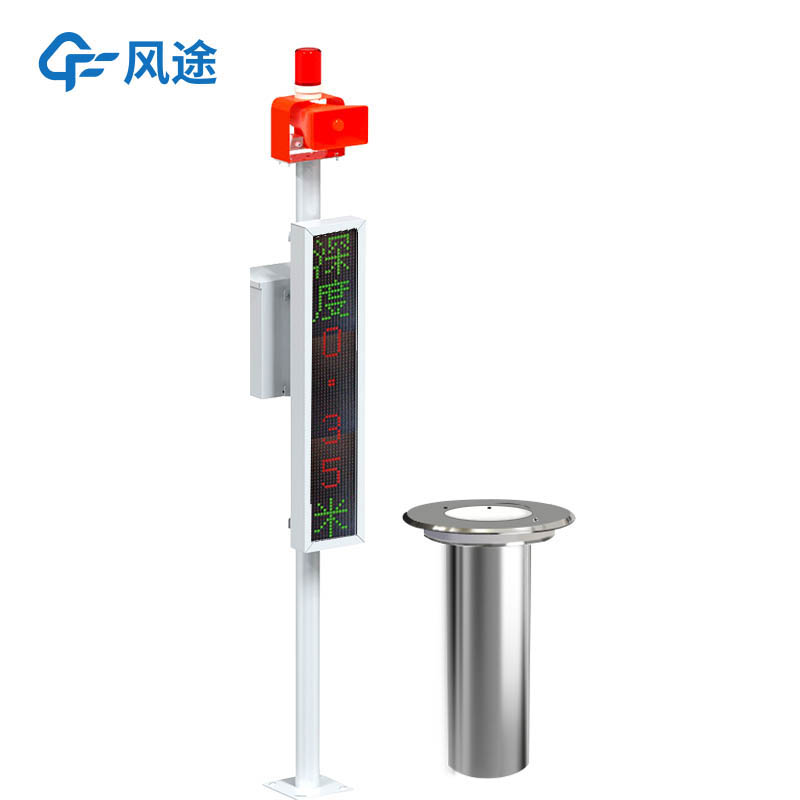
Fentu Technology, a manufacturer of radar water level gauges, offers an 80GHz high-frequency radar gauge utilizing Frequency Modulated Continuous Wave (FMCW) technology. With a measurement range of 0.1 to 40 meters, an accuracy of ±5 mm, and a resolution of 1 mm, this device features a non-co...
Due to the special nature of their production processes, chemical plants have strict requirements for meteorological condition monitoring. This need stems from two core backgrounds: first, from a safety perspective, many chemical materials are extremely sensitive to wind speed, wind direction, and o...
With the increasing demand for ecological protection and sustainable development in modern agriculture, the environmental pollution and pest resistance caused by the overuse of traditional chemical pesticides urgently need to be addressed. Physical pest control methods have gradually become an impor...
In the water conservancy and water services industry, water regime monitoring is a fundamental task. Especially during summer when natural disasters occur frequently, monitoring enables disaster prediction and provides data support for formulating flood prevention and relief plans. With the applicat...


 Skype
Skype
 whatsapp
 mail
mail