Tianqiong Sensor IOT Technology Co., Ltd
Sales Manager:Ms. Emily Wang
Cel,Whatsapp,Wechat:+86 15898932201
Email:info@fengtutec.com
Add:No. 155 Optoelectronic Industry Accelerator, Gaoxin District, Weifang, Shandong, China


Sales Manager:Ms. Emily Wang
Cel,Whatsapp,Wechat:+86 15898932201
Email:info@fengtutec.com
Add:No. 155 Optoelectronic Industry Accelerator, Gaoxin District, Weifang, Shandong, China
time:2025-08-20 09:25:57 source:Weather Station viewed:448 time
In the water conservancy and water services industry, water regime monitoring is a fundamental task. Especially during summer when natural disasters occur frequently, monitoring enables disaster prediction and provides data support for formulating flood prevention and relief plans. With the application of modern technology, the water regime monitoring mode for water conservancy facilities such as rivers and reservoirs has been fully upgraded.
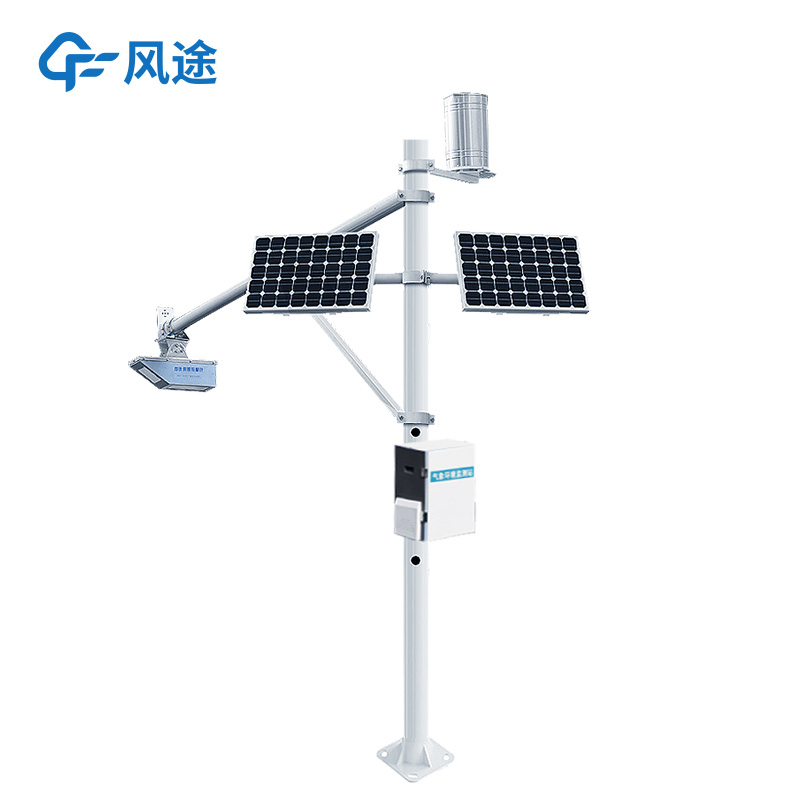
Centered on the Internet of Things (IoT), wireless communication, and automated control technologies, the River Level Monitoring Station can collect rainfall and water regime information online. It integrates remote monitoring, data storage, and analysis & processing functions to realize the automatic collection, transmission, and storage of water regime data. The system consists of liquid level sensors, intelligent control cabinets, a smart water conservancy cloud platform, video surveillance, and transmission equipment. It mainly conducts real-time monitoring of rainfall volume and water level. Data is uploaded to the cloud via wireless networks such as GPRS and LORA for storage, management, and analysis. In case of abnormal water conditions, remote warnings can be activated.
On-site monitoring equipment first collects water regime information, then uploads real-time data to the cloud platform. After analysis by the platform, more water regime-related information can be generated. This data can also be synchronously pushed to terminals such as Android phones, computers, and tablets, facilitating staff to check it at any time. Relying on this system, real-time mastery of regional rainfall and river water level changes can be achieved. When floods occur, a rapid response can be initiated, providing guarantees for scientific decision-making and rational scheduling.
The system’s functions include six core aspects:
Hydrological Data Collection: According to the actual needs of different regions, devices such as ultrasonic liquid level sensors and radar liquid level sensors are selected to realize real-time collection and transmission of water regime information.
Wireless Communication: Data is transmitted to the cloud platform via networks like GPRS. The quantity and type of collection devices can be flexibly selected, without being restricted by the communication conditions of water conservancy facilities.
Video Surveillance: It supports the access of network camera images to the cloud platform, which are displayed on the same screen as hydrological information, enabling multi-dimensional monitoring.
Early Warning Function: The cloud platform has a built-in alarm mechanism to issue warnings for abnormal hydrological data, equipment failures, and other situations. Staff are notified via cloud messages, local sound and light alerts, emails, etc.
Data Management: Historical data such as hydrological information and alarm records are automatically stored in the cloud. Data change trends can be queried by time, and the system supports exporting data in Excel format and printing.
User Management: For different management levels, users can be added and permissions such as management, editing, operation, and read-only can be set.
The system also has five advantages:
Automatic Collection and Upload: It can process large amounts of data quickly, obtain hydrological information at a maximum frequency of once per minute, and operate continuously for 24 hours.
Remote Wireless Transmission: Taking the LORA network as an example, the point-to-point communication distance reaches 3 kilometers, which can cover multiple monitoring points.
Real-Time Water Regime Analysis: Monitoring parameters can be adjusted to improve monitoring efficiency.
Expandability: It can be used in conjunction with systems such as water supply monitoring and sewage treatment pumps, and provides customized hardware and software services.
Adherence to Open and Advanced Principles: It is equipped with a variety of communication interfaces, reserving space for the development of smart water services.
Fengtu's fluorescence method chlorophyll a online analyzer detects chlorophyll content based on fluorescence characteristics and is specifically designed for online monitoring of rivers, lakes, and ponds. The instrument is easy to operate, stable in performance, and accurate in measurement...
As environmental pollution becomes increasingly complex, the limitations of traditional air monitoring methods are gradually becoming apparent. The national ambient air monitoring network has a limited number of stations and high costs, and the method of using points to represent the whole area resu...
In the fields of meteorological monitoring and hydrology, the piezoelectric rain gauge and the Radar Precipitation Sensor Rain Gauge Distrometer are commonly used rainfall monitoring devices. Today, the author will compare the differences between the two.The piezoelectric rain gauge works by u...
Soil electrical conductivity (EC) is a critical indicator for measuring the content of soluble salts in soil, reflecting the total concentration of various ions in the soil solution or the ionic strength of water-soluble substances. When salts in the soil dissolve, they exist in ionic form—the high...


 Skype
Skype
 whatsapp
 mail
mail