Tianqiong Sensor IOT Technology Co., Ltd
Sales Manager:Ms. Emily Wang
Cel,Whatsapp,Wechat:+86 15898932201
Email:info@fengtutec.com
Add:No. 155 Optoelectronic Industry Accelerator, Gaoxin District, Weifang, Shandong, China


Sales Manager:Ms. Emily Wang
Cel,Whatsapp,Wechat:+86 15898932201
Email:info@fengtutec.com
Add:No. 155 Optoelectronic Industry Accelerator, Gaoxin District, Weifang, Shandong, China
time:2025-07-02 08:55:34 source:Weather Station viewed:408 time
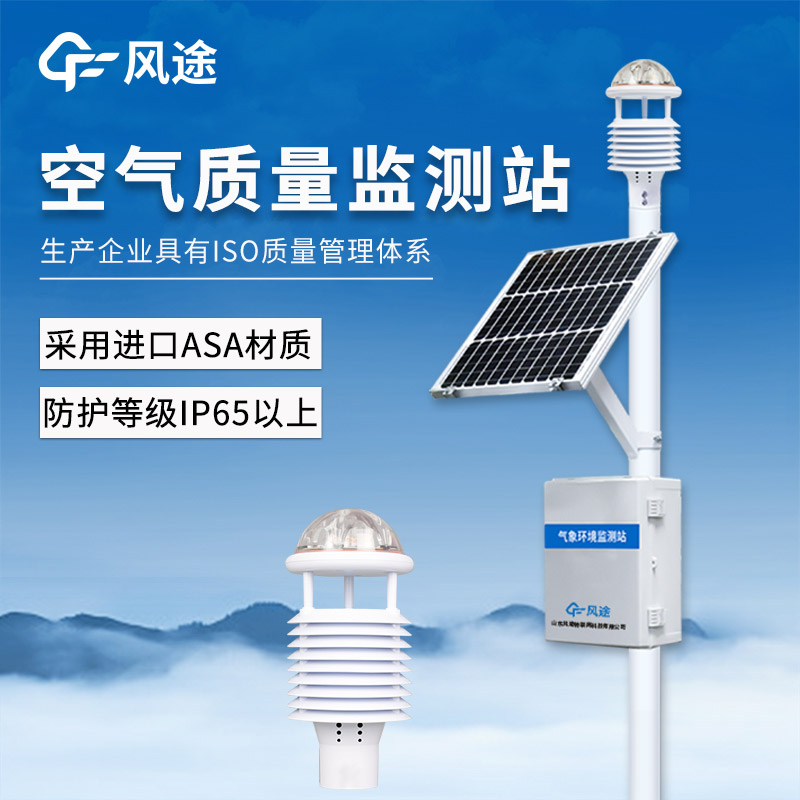
Air quality monitoring stations are compact in size and occupy a small footprint, making them easy to install and deploy. They can be flexibly set up in various locations, such as urban streets, parks, schools, communities, and industrial parks, and even installed on external walls of buildings or street lamp poles, which greatly expands the monitoring range. Compared with traditional large-scale monitoring stations, micro monitoring stations cost less, with both equipment purchase and later maintenance costs significantly reduced, providing economic feasibility for large-scale grid-based monitoring. Meanwhile, they feature fast response speed, capable of real-time monitoring of air quality changes and timely data feedback, helping relevant departments quickly grasp environmental dynamics.
Air quality monitoring stations can monitor multiple parameters to comprehensively reflect air quality conditions. Common monitoring parameters include particulate matter indicators such as PM2.5 and PM10, which are important factors measuring air quality and closely related to human health. In addition, they can monitor gaseous pollutants such as sulfur dioxide (SO₂), nitrogen dioxide (NO₂), carbon monoxide (CO), and ozone (O₃), which cause great harm to the environment and human body. They can also monitor characteristic pollutants such as total volatile organic compounds (TVOC), hydrogen sulfide (H₂S), and ammonia (NH₃). Through comprehensive monitoring of multiple parameters, air quality can be accurately evaluated.
Grid-based monitoring is an important application mode of air quality monitoring stations. It divides the monitoring area into several grids, sets up monitoring stations in each grid, and constructs a comprehensive monitoring network. This monitoring method can obtain high spatio-temporal resolution pollution data, carry out fine-grained monitoring of air quality in the region, and clearly present the differences and change trends of air quality in different regions and periods. Once air quality anomalies occur in a certain grid, the polluted area can be quickly locked, providing a strong basis for precise tracing and governance. For example, in cities, grid-based monitoring can clearly distinguish the air quality conditions of different functional areas such as busy traffic roads, industrial clusters, and residential areas, and adopt targeted treatment measures for severely polluted areas to improve treatment efficiency.
The application of air quality monitoring stations in multi-parameter air quality grid-based monitoring has brought new opportunities for environmental management and protection. It can help environmental protection departments more comprehensively and accurately grasp air quality information, formulate scientific and effective pollution prevention and control strategies, and play an important role in improving air quality and protecting public health.
In today's society, environmental problems are becoming more and more serious. From air pollution to water quality deterioration, from soil pollution to noise interference, these issues seriously affect the survival and development of human beings. As an important cornerstone of environmental pr...
Micrometeorology is an important branch of meteorology that studies the physical processes and phenomena in the near-surface atmosphere, typically within a range of a few meters to tens of meters above the Earth's surface. Unlike traditional meteorology that focuses on large-scale weather patter...
The construction of hydrological monitoring station networks in irrigation districts utilizes microwave radar technology to measure water level, flow velocity, flow rate, and rainfall in channels in a non-contact manner. This method is unaffected by silt and floating debris, providing high-pre...
In traditional agricultural production, there has always been a problem of lag in crop disease prevention and control. Farmers mainly rely on experience to judge diseases, and by the time obvious symptoms appear in the field, certain losses have often been caused. Blind use of pesticides is also com...


 Skype
Skype
 whatsapp
 mail
mail