Tianqiong Sensor IOT Technology Co., Ltd
Sales Manager:Ms. Emily Wang
Cel,Whatsapp,Wechat:+86 15898932201
Email:info@fengtutec.com
Add:No. 155 Optoelectronic Industry Accelerator, Gaoxin District, Weifang, Shandong, China


Sales Manager:Ms. Emily Wang
Cel,Whatsapp,Wechat:+86 15898932201
Email:info@fengtutec.com
Add:No. 155 Optoelectronic Industry Accelerator, Gaoxin District, Weifang, Shandong, China
time:2025-11-03 08:59:31 source:Weather Station viewed:462 time
Micrometeorology is an important branch of meteorology that studies the physical processes and phenomena in the near-surface atmosphere, typically within a range of a few meters to tens of meters above the Earth's surface. Unlike traditional meteorology that focuses on large-scale weather patterns, micrometeorology concentrates on local, small-scale meteorological conditions where significant changes can occur over short distances and time periods.
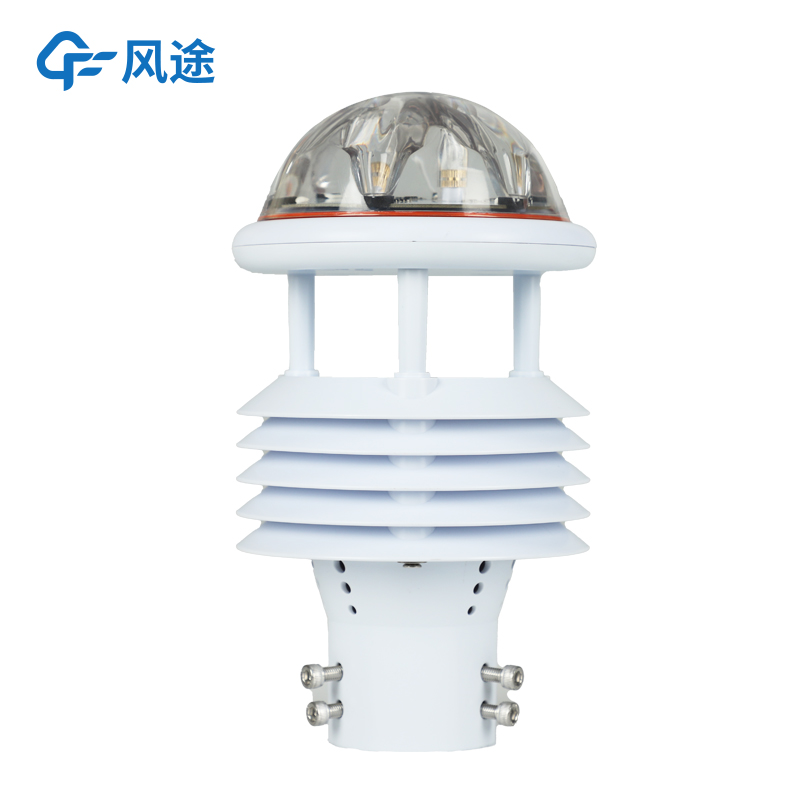
To accurately monitor such fine-scale meteorological information, the micro weather sensor was developed. It is a highly integrated environmental monitoring device capable of simultaneously measuring multiple meteorological elements, providing powerful data support for understanding and predicting local environmental conditions.
Traditional environmental monitoring stations often consist of multiple independent sensors, resulting in large size and complex installation. In contrast, modern micro weather sensors highly integrate core measurement functions into a compact unit. They can simultaneously and collocationally measure wind speed, wind direction, air temperature, relative humidity, atmospheric pressure, and optical rainfall.
Each parameter measured by a micro weather sensor directly reflects one aspect of the environment:
Wind speed and direction: Fundamental data for assessing wind energy resources, conducting pollutant diffusion simulations, and ensuring safety in aviation, navigation, and construction.
Air temperature and humidity: Directly affecting human comfort, pest and disease prediction in agricultural production, and material storage and production processes in industrial settings.
Atmospheric pressure: An important basis for weather forecasting, as its changing trends can indicate the movement and development of weather systems.
Optical rainfall: Utilizing optical principles to measure precipitation, it can more accurately distinguish raindrop size and intensity, providing high time-resolution rainfall data that is particularly crucial for flood warning, water resource management, and traffic safety assurance.
Handheld Anemometer is a portable meteorological instrument used for measuring wind speed and direction. It is easy to operate and can accurately measure both meteorological elements simultaneously. It is widely used in meteorology, environmental protection, aviation, and various outdoor engineering activities....
Handheld Anemometer employs precision sensors and intelligent chips to accurately measure both wind direction and wind speed simultaneously. It is suitable for agriculture, forestry, environmental protection, marine science, and scientific research, used for real-time monitoring of atmospheric...
Wireless Weather Station Features an integrated 7-in-1 sensor module capable of real-time measurement of wind speed, wind direction, air temperature, humidity, atmospheric pressure, illuminance, and optical rainfall. It comes standard with three data transmission methods—GPRS, Bluetooth, and...
Fengtu's fluorescence method chlorophyll a online analyzer detects chlorophyll content based on fluorescence characteristics and is specifically designed for online monitoring of rivers, lakes, and ponds. The instrument is easy to operate, stable in performance, and accurate in measurement...


 Skype
Skype
 whatsapp
 mail
mail