Tianqiong Sensor IOT Technology Co., Ltd
Sales Manager:Ms. Emily Wang
Cel,Whatsapp,Wechat:+86 15898932201
Email:info@fengtutec.com
Add:No. 155 Optoelectronic Industry Accelerator, Gaoxin District, Weifang, Shandong, China


Sales Manager:Ms. Emily Wang
Cel,Whatsapp,Wechat:+86 15898932201
Email:info@fengtutec.com
Add:No. 155 Optoelectronic Industry Accelerator, Gaoxin District, Weifang, Shandong, China
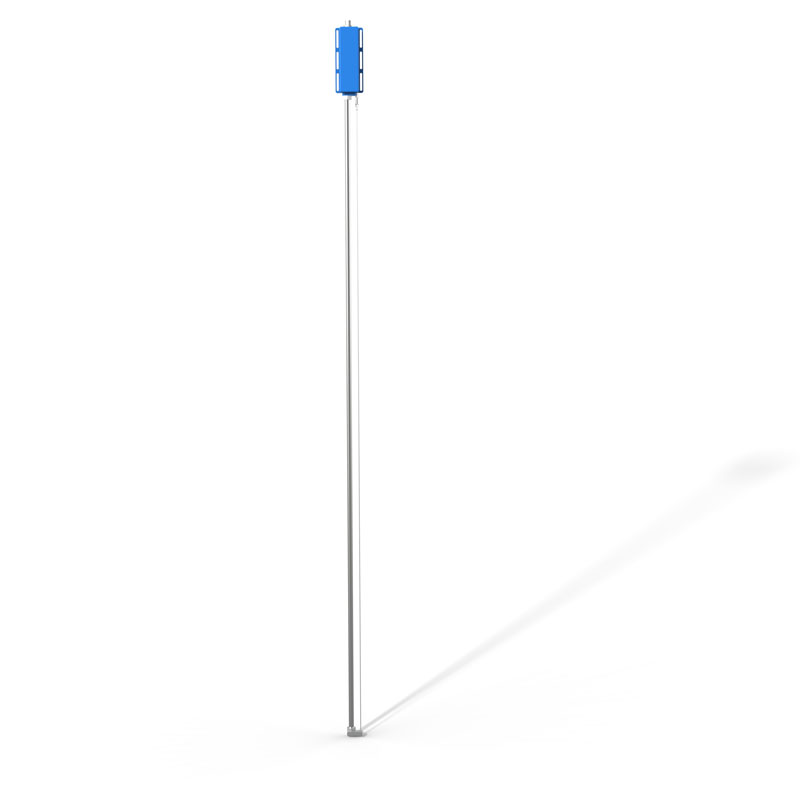
Model:FT-LG100
Brand:tianqiong
1、Wave height meter Product Introduction
Wave height meter can measure the change of wave height in order to measure the dynamically changing liquid level, especially the wave height of water.Wave height meter is a high-performance hydrological monitoring device integrating a low-power microprocessor, a 24-bit high-precision AD converter, and a capacitive wave height sensor.
Its integrated structure enables convenient installation and excellent stability. Simultaneously, the device employs RS485 long-distance communication technology, ensuring anti-interference capability and reliable data transmission over long distances.
This instrument boasts stable performance and is specifically designed for the accurate measurement of wave parameters and water level in free fluids. It not only features extremely low power consumption but also excellent linearity, high precision, fast response, no mechanical contact, and high reliability.
It is an ideal choice for long-term reliable monitoring in marine, port, reservoir, and lake environments.
2、Wave height meter Technical Specifications
Measuring Range: 0-1000mm
Resolution: 0.1mm
Measuring Accuracy: ≤0.1%F.S
Sampling Frequency: >100Hz
Operating Voltage: DC12V
Rated Power Consumption: <0.5W
Output Signal: RS485-MODBUS Protocol
Operating Temperature: 0℃~+60℃
Storage Temperature: -40℃~+70℃
Protection Rating: IP67
Housing Material: 304 Stainless Steel
Cable Length: 5m
Installation Method: Vertical Fixed Installation
Portable Weather Station integrates meteorological monitoring with flexible mobile platforms, providing convenient and efficient meteorological data monitoring services for various scenarios.Designed to be compact and small in size, it is easy to install on special vehicles such as emergency rescue...
In the fields of meteorological monitoring and hydrology, the piezoelectric rain gauge and the Radar Precipitation Sensor Rain Gauge Distrometer are commonly used rainfall monitoring devices. Today, the author will compare the differences between the two.The piezoelectric rain gauge works by u...
Due to the special nature of their production processes, chemical plants have strict requirements for meteorological condition monitoring. This need stems from two core backgrounds: first, from a safety perspective, many chemical materials are extremely sensitive to wind speed, wind direction, and o...
Photovoltaic weather stations are professional monitoring devices specifically designed for the photovoltaic industry, capable of real-time and precise measurement of multiple key parameters. Among them, the measurement of thermoelectric total radiation parameters can obtain comprehensive energy dat...


 Get a Free Quote
 Skype
Skype
 whatsapp
 mail
mail