Tianqiong Sensor IOT Technology Co., Ltd
Sales Manager:Ms. Emily Wang
Cel,Whatsapp,Wechat:+86 15898932201
Email:info@fengtutec.com
Add:No. 155 Optoelectronic Industry Accelerator, Gaoxin District, Weifang, Shandong, China


Sales Manager:Ms. Emily Wang
Cel,Whatsapp,Wechat:+86 15898932201
Email:info@fengtutec.com
Add:No. 155 Optoelectronic Industry Accelerator, Gaoxin District, Weifang, Shandong, China
time:2025-11-21 10:35:49 source:Weather Station viewed:486 time
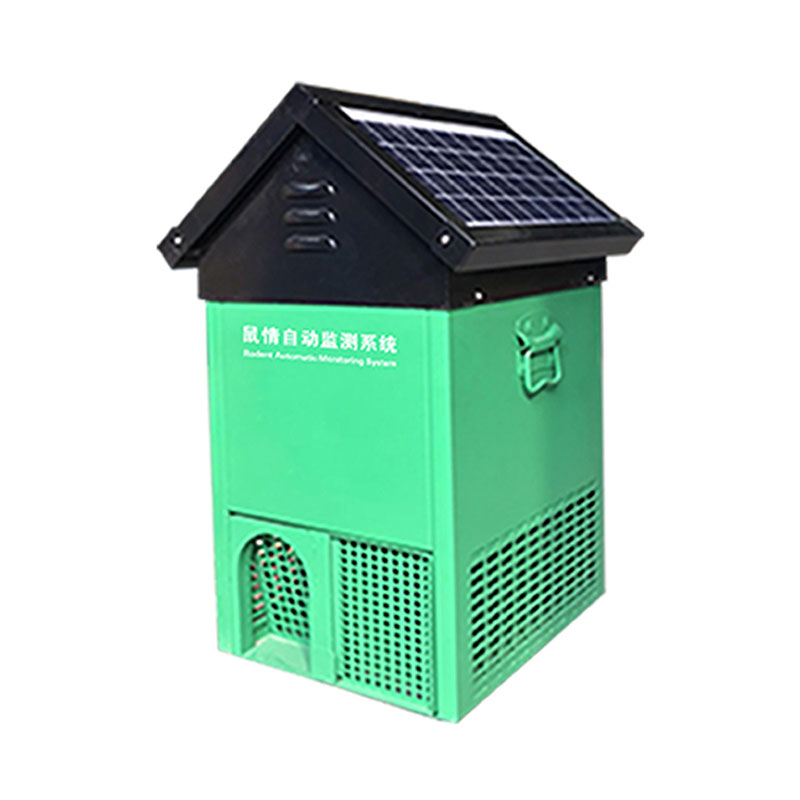
Rat Bait Station utilizes the Internet of Things (IoT) and intelligent recognition technology to achieve 24/7 rodent activity data collection and remote control management.
Rat Bait Station is a comprehensive platform centered on an IoT architecture, integrating sensor networks, machine vision, and big data analysis. The system continuously collects rodent activity data through intelligent terminals deployed in areas such as farmland, warehouses, and equipment rooms, and transmits the information to a cloud-based management interface using remote communication technology. Its core functions include real-time monitoring, intelligent identification, density assessment, and early warning intervention, supporting precise decision-making in rodent control.
The system's technical composition relies on the collaboration of multiple types of hardware and algorithms. Monitoring terminals are typically equipped with infrared sensors, ultrasonic detectors, or biosensors to capture rodent movement, weight, or sound signals. The image acquisition module records rodent characteristics using 2-20 megapixel cameras, and then classifies the species (e.g., brown rat, house mouse) based on deep learning models. The communication module supports 2G/3G/4G networks or LoRaWAN protocols to send data to the cloud platform. The power system often uses a combination of solar panels and batteries to ensure long-term operation in the field. The management interface provides heat maps, statistical reports, and mobile phone alert push functions.
In terms of monitoring mechanisms, the system achieves 24/7 automated operation. Infrared detection units trigger counting when rodents enter traps; weighing sensors record individual weight changes; and intelligent trapping devices control rodent entry and exit through a one-way door structure. The platform establishes a rodent density prediction model by analyzing historical data and environmental parameters (such as temperature and humidity). For example, in the Qinghai Plateau agricultural area, a mathematical model was constructed using 41 monitoring points, correlating underground rodent activity with climatic factors.
This type of system has been applied in various scenarios. In agriculture, it guides the timing of bait placement by monitoring rodent density dynamics, reducing crop losses; in unattended equipment rooms, non-toxic trapping devices are used to avoid the need for immediate intervention; and grassland patrol systems combine mobile units and Zigbee communication to achieve large-area path planning and rodent burrow location. In urban environments, the system uses heat maps to mark rodent aggregation areas, assisting public health teams in targeted rodent control resource allocation.
The advantages of Rat Bait Station lie in its efficiency and sustainability. Compared to traditional manual inspections, remote monitoring reduces the manpower required for on-site inspections by 80%; the real-time alarm mechanism shortens response time from days to hours; and long-term data accumulation facilitates regional rodent pest trend analysis, such as the discovery of a bimodal seasonal pattern in rodent density through 9 years of monitoring in the military camp of the Lanzhou garrison. Furthermore, precise baiting reduces the impact of chemical agents on non-target organisms.
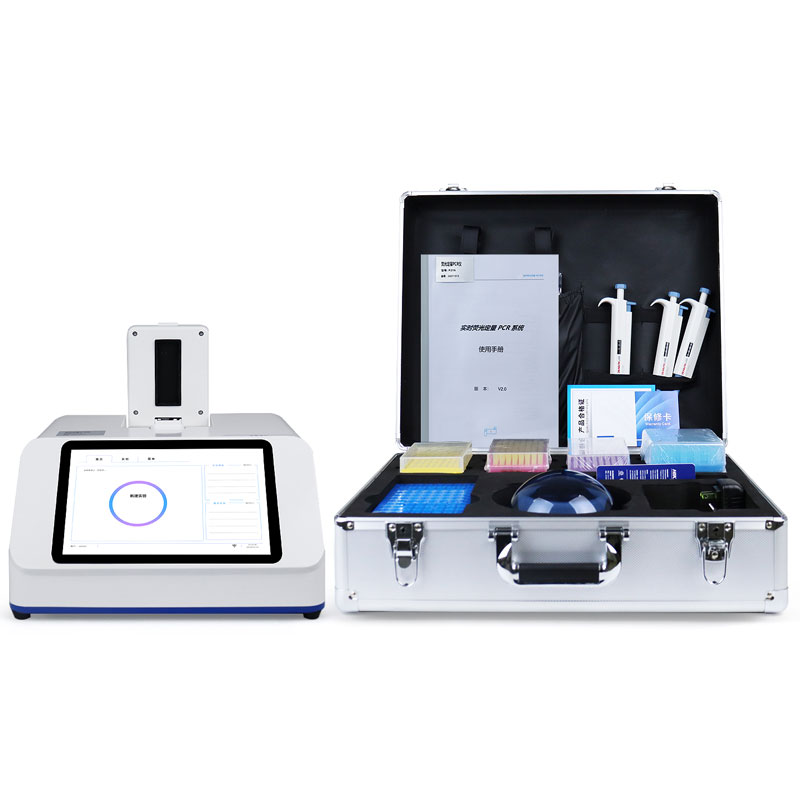
Fluorescent Quantitative PCR Detection System is a laboratory instrument integrating fluorescence optical detection, a temperature control system, and data analysis software. It employs four-channel fluorescence detection and a 48-well reaction module, with a maximum power of 550W and a weight...
Handheld Weather Station is a portable meteorological observation instrument that integrates wind direction, wind speed, atmospheric pressure, temperature, and humidity measurement. Its compact size and light weight allow for one-handed operation and easy carrying and deployment, meeting the n...
In a certain farmland, the LED electronic display of "standard agrometeorological stations" real-time presents data such as soil water content, salinity, and ground temperature, providing key basis for farmers' scientific planting. The new-generation standard agrometeorological station...
Based on real-time quantitative PCR (qPCR) technology, GMO Testing can specifically identify and quantitatively detect common GM components in corn, providing precise detection support for corn production, trade, safety supervision, and food processing....


 Skype
Skype
 whatsapp
 mail
mail