Tianqiong Sensor IOT Technology Co., Ltd
Sales Manager:Ms. Emily Wang
Cel,Whatsapp,Wechat:+86 15898932201
Email:info@fengtutec.com
Add:No. 155 Optoelectronic Industry Accelerator, Gaoxin District, Weifang, Shandong, China


Sales Manager:Ms. Emily Wang
Cel,Whatsapp,Wechat:+86 15898932201
Email:info@fengtutec.com
Add:No. 155 Optoelectronic Industry Accelerator, Gaoxin District, Weifang, Shandong, China
time:2025-05-13 09:41:15 source:Weather Station viewed:441 time
With the continuous progress of science and technology, refined meteorological monitoring has become an important development direction of modern meteorological services. The purpose of refined meteorological monitoring is to obtain more accurate, detailed, and high spatio-temporal resolution meteorological data, so as to more accurately predict weather changes and provide early warnings of natural disasters. It provides more valuable meteorological information for many fields such as agriculture, transportation, environmental protection, and urban planning, thus better serving social and economic development and people's travel.
Meteorological instruments, as key tools for refined meteorological monitoring, come in a wide variety of types with different functions, jointly forming a complete meteorological monitoring system.
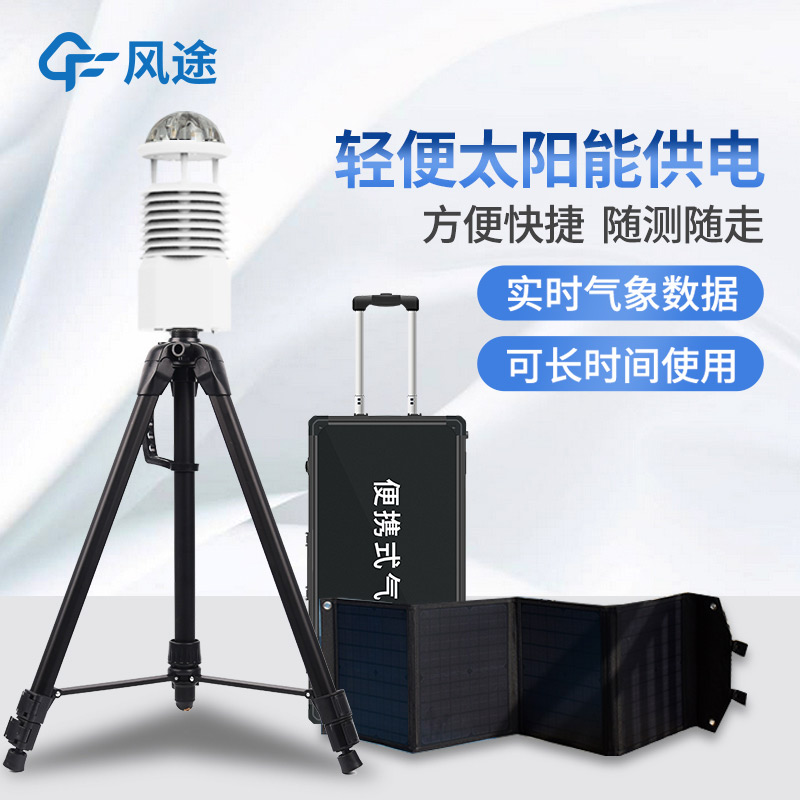
The Portable Weather Station is characterized by its small size, portability, integrated functions, and easy operation. It integrates multiple high-precision sensors for temperature, humidity, wind speed, wind direction, air pressure, etc. It has functions such as data storage, display, and wireless transmission. It is suitable for scenarios such as field emergency monitoring, scientific research investigations, outdoor sports, agricultural and forestry production, and natural disaster rescue. It can be quickly deployed and provide real-time meteorological data, making up for the deficiencies of fixed weather stations.
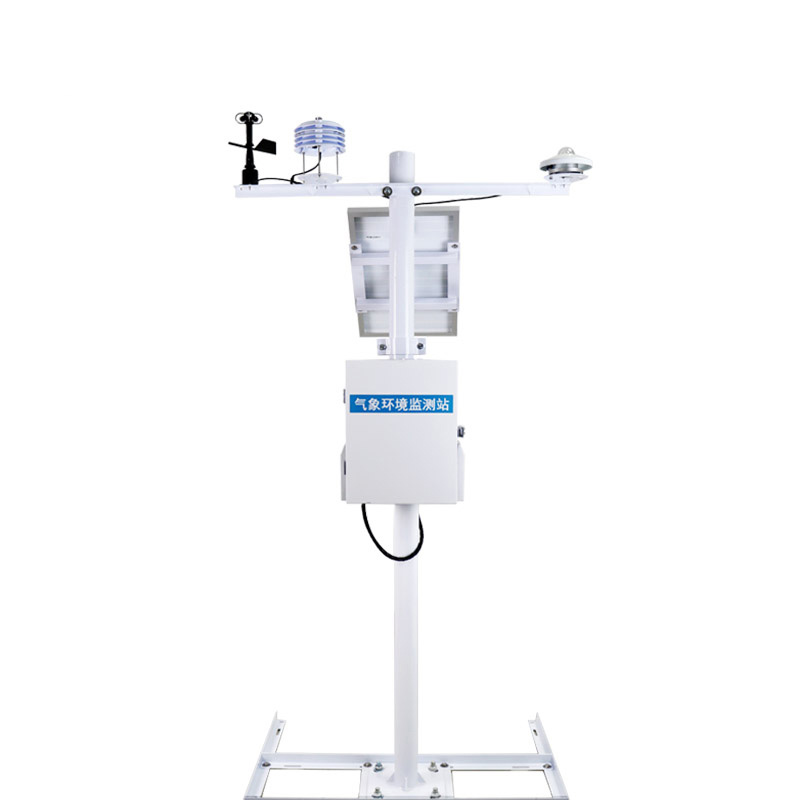
Automatic weather observation stations can automatically, continuously, and in real time monitor multiple meteorological elements, such as temperature, humidity, air pressure, wind speed, wind direction, rainfall, etc. Generally, they are composed of sensors, data collectors, communication modules, power supply systems, etc. They can operate unattended and stably for a long time, providing a large amount of basic data for weather forecasting, climate analysis, and so on.
Agricultural weather stations focus on monitoring meteorological elements related to agriculture, such as leaf surface humidity, photosynthetically active radiation, soil temperature and humidity, carbon dioxide concentration, etc. They meet the refined needs of agricultural production for meteorological information, help farmers reasonably arrange agricultural activities, improve crop yield and quality, and achieve refined management and precise operation in agriculture.
There is also a traffic meteorological monitoring system, which is mainly used to monitor meteorological factors affecting traffic, such as visibility, road surface conditions, etc., providing decision-making support for traffic management departments and ensuring traffic safety. And meteorological instruments for environmental monitoring can monitor the concentration of pollutants in the atmosphere, acid rain, etc., providing data basis for environmental protection and pollution control.
The Negative Oxygen Ion Monitoring System is a monitoring framework built on professional technologies, with its core technical architecture integrating sensing technology and IoT communication technology. The sensor employs a universal capacitive detection principle to measure the concentration of...
The 7-element Portable Weather Station can real-time monitor seven key meteorological elements: wind speed, wind direction, air temperature, humidity, atmospheric pressure, illumination, and optical rainfall. Monitoring wind speed and direction helps understand air flow conditions, which is of great...
Negative oxygen ions exert physiological effects on the human nervous system and blood circulation. Their concentration directly reflects air quality and serves as a key indicator for air quality assessment. The Negative Oxygen Ion Monitoring Station is specially designed to monitor this core indica...
Combustion is a common energy conversion method.During combustion, flue gas is emitted. Analyzing its composition—primarily components like oxygen, carbon monoxide (CO), and carbon dioxide (CO₂)—helps determine if combustion is complete and calculate combustion efficiency.The level of combustion...


 Skype
Skype
 whatsapp
 mail
mail