Tianqiong Sensor IOT Technology Co., Ltd
Sales Manager:Ms. Emily Wang
Cel,Whatsapp,Wechat:+86 15898932201
Email:info@fengtutec.com
Add:No. 155 Optoelectronic Industry Accelerator, Gaoxin District, Weifang, Shandong, China


Sales Manager:Ms. Emily Wang
Cel,Whatsapp,Wechat:+86 15898932201
Email:info@fengtutec.com
Add:No. 155 Optoelectronic Industry Accelerator, Gaoxin District, Weifang, Shandong, China
time:2025-11-28 10:32:09 source:Weather Station viewed:343 time
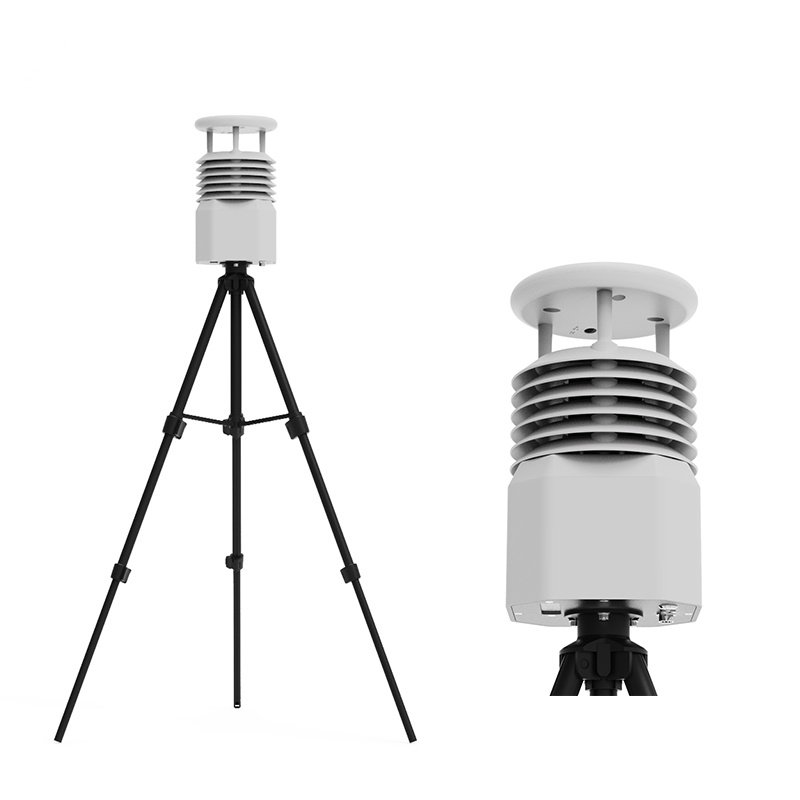
Portable Weather Station is a highly integrated, low-power, and rapidly deployable high-precision automatic meteorological observation device. It is suitable for various scenarios such as emergency short-term meteorological observation, mobile meteorological monitoring, and microclimate environment monitoring. It is primarily used for data acquisition in fields such as meteorology, agriculture and forestry, environmental protection, and emergency monitoring.
Portable Weather Station is a field meteorological observation instrument that integrates multiple sensors and data processing systems. The device adopts a modular design, integrating meteorological element acquisition, data storage, and transmission functions into a compact casing. Its outstanding features are portability and rapid deployment, allowing for installation and data acquisition to begin within a short time.
The core technical indicators of the device include highly integrated design, low power consumption, and rapid installation capabilities. The integrated design is reflected in the concentration of sensors for temperature, humidity, pressure, wind speed, wind direction, precipitation, and solar radiation into a single system. Low power consumption is achieved through optimized circuit design and a sleep-wake mechanism, ensuring long-term operation in the field. The rapid installation function, facilitated by a foldable bracket and modular interfaces, allows the device to be deployed within minutes of arriving on-site.
In terms of meteorological parameter measurement, the device is equipped with a series of high-precision sensors. Temperature measurement uses a platinum resistance sensor, covering a range of -50 to +50 degrees Celsius. Humidity detection uses a capacitive polymer thin-film sensor, with a measurement range of 0-100% RH. Air pressure monitoring is achieved through a silicon piezoresistive sensor, typically with a range of 300-1100 hPa. Wind speed and direction sensors utilize ultrasonic principles and electronic compass technology, respectively; precipitation is recorded by a piezoelectric rain gauge, and solar radiation is quantified using a photoelectric sensor.
The device's structure includes a sensor group, data collector, power supply unit, and communication module. The sensor group is responsible for sensing various meteorological elements, the data collector performs signal processing and storage, the power supply unit offers battery or solar power options, and the communication module supports multiple data transmission methods such as GPRS, 4G, or satellite communication. The overall structure features a waterproof and dustproof design, adapting to various harsh environmental conditions.
In emergency meteorological observation scenarios, Portable Weather Station plays a crucial role. In the event of natural disasters or emergencies, the device can be quickly transported to the site to establish a temporary meteorological observation point. The monitoring data provides real-time meteorological information support for emergency rescue decision-making, including key parameters such as wind direction and speed for pollutant dispersion assessment, and precipitation for flood warning.
Mobile meteorological monitoring is another major application area of the equipment. The device can be installed on mobile vehicles or temporary sites, and its location can be changed as needed to meet monitoring requirements. This mobility makes it particularly suitable for situations requiring dynamic meteorological data, such as major event support, scientific expeditions, and border patrols. The device maintains continuous and stable data recording even while in motion.
Microclimate environment monitoring is an important application direction of the equipment. In the agricultural and forestry sectors, the device can be used to monitor the microclimate characteristics of farmland and forest areas, providing data support for precision agriculture and forest fire prevention. In urban environments, the device can assess wind field effects and heat island phenomena between building clusters. In ecological protection areas, the device can continuously monitor the specific climate characteristics of a particular region.
The equipment's data acquisition system automatically records various meteorological parameters at preset time intervals, and the sampling frequency can be adjusted as needed. The collected data is stored internally in the device and simultaneously transmitted to the monitoring center via a communication network. The data management platform is responsible for receiving, parsing, and storing this data, and provides visualization and statistical analysis functions.
Maintenance of the Portable Weather Station is relatively simple, mainly including regular cleaning of sensors, checking the power status, and calibrating measurement accuracy. The device usually has a self-diagnostic function that prompts the user to perform necessary maintenance operations. With technological advancements, new generations of equipment are developing towards higher accuracy, longer battery life, and stronger environmental adaptability, and their application value in various fields is becoming increasingly prominent.
Mobile weather station is a highly integrated, low-power automatic weather observation device. It can monitor key meteorological elements such as wind speed, wind direction, temperature, humidity, atmospheric pressure, and optical rainfall in real time. It supports rapid installation and...
Crop growth monitoring refers to the dynamic observation of crop seedling status, growth conditions and their changes, which is related to the adjustment of cultivation measures. The adoption of rapid and non-destructive monitoring methods can not only reflect the changes in crop yield (whether abun...
The crop growth condition is an important term in the agricultural field, referring to the growth and development status of crops at various stages from sowing to maturity. It includes comprehensive information such as plant morphology, population structure, and physiological indicators, and is cruc...
In the photovoltaic industry, the problem of black edges on photovoltaic modules is quite common. The black edges are mainly caused by poor sealing of the frame during the module encapsulation process, which allows water vapor and oxygen to penetrate, causing oxidation or corrosion at the edges of t...


 Skype
Skype
 whatsapp
 mail
mail