Tianqiong Sensor IOT Technology Co., Ltd
Sales Manager:Ms. Emily Wang
Cel,Whatsapp,Wechat:+86 15898932201
Email:info@fengtutec.com
Add:No. 155 Optoelectronic Industry Accelerator, Gaoxin District, Weifang, Shandong, China


Sales Manager:Ms. Emily Wang
Cel,Whatsapp,Wechat:+86 15898932201
Email:info@fengtutec.com
Add:No. 155 Optoelectronic Industry Accelerator, Gaoxin District, Weifang, Shandong, China
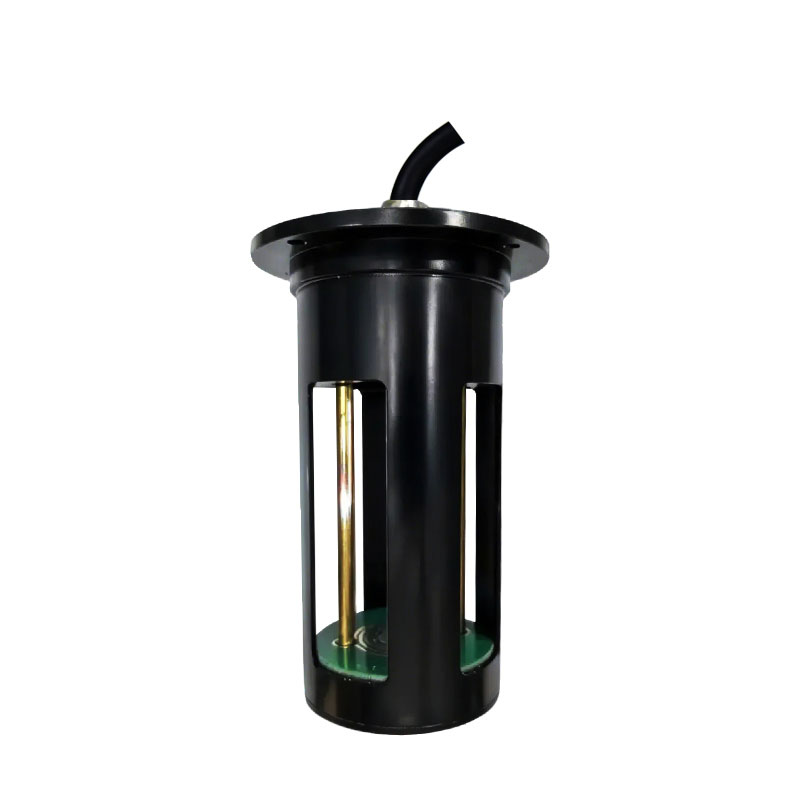
Model:FT-JB1H
Brand:tianqiong
1、Ice Monitoring Equipment Introduction
Ice Monitoring Equipment is a non-contact ice detection system capable of measuring ice thickness from 0.2mm~50mm.Ice Monitoring Equipment employs a unique microwave detection technology combined with thermal analysis to achieve real-time monitoring of icing conditions on various components of wind turbines—including nacelles, blades, cables, cooling towers, communication antennas, and other outdoor equipment. The system issues icing alerts for monitored zones, calculates ice thickness, provides real-time assessments of icing-related risks, and issues de-icing control commands to activate the de-icing system. This ensures the safe operation of equipment units in harsh, icy weather conditions, enhances operational efficiency, and reduces the energy consumption associated with de-icing.
For blade icing monitoring, an embedded structural design is utilized. The sensors are compact and designed for distributed installation, allowing them to be easily mounted on ice-prone areas such as the blade edges. This approach resolves the limitations of existing non-contact monitoring methods, which often fail to accurately reflect actual icing conditions. Furthermore, the sensors feature a lightning-proof structural design to prevent damage to both the sensors and the blades caused by lightning strikes; they also incorporate a built-in heating function to minimize the probability of missed detections or false alarms.
The icing monitoring sensors for wind turbine nacelle casings address the challenge of monitoring blade icing on turbines that have already been installed—a scenario where embedded blade sensors cannot be retrofitted. By analyzing icing data on the nacelle surface—and integrating this with climatic data (temperature and humidity) monitored across the wind farm—the system indirectly infers the icing status of the blades. This enables the activation of the blade de-icing system, thereby reducing the risk of operational accidents caused by harsh, icy weather and improving power generation efficiency.
For the icing monitoring of other outdoor equipment—such as antennas, cooling towers, and cables—installation locations are selected based on the specific application environment. The sensors can be custom-designed to suit the precise physical location, thereby ensuring that they accurately and comprehensively reflect the icing conditions of the specific equipment being monitored.
2、Ice Monitoring Equipment Product Principle
This sensor employs microwave detection technology. By leveraging the distinct feedback signals generated when microwave waves interact with different substances—such as ice, water, and air—it monitors for the presence of ice within the sensor's sensitive zone. Furthermore, based on the intensity of the signals and the spatial distribution of ice within the sensitive zone, the device calculates the ice thickness. Users can configure specific icing alarm thresholds corresponding to various ice thickness levels, thereby facilitating the timely activation of de-icing systems.
Common types of automatic icing detectors include oscillating, differential pressure, microwave perturbation, radioisotope, and optical icing detectors.
The core component of an oscillating icing detector is an ultrasonic axial oscillating probe. When ice accumulates on the probe, its oscillation frequency changes; by utilizing this principle, the device can detect whether the aircraft is experiencing icing.
Differential pressure icing detectors—also known as ram-air icing detectors—determine the presence of ice by measuring the difference between the dynamic pressure (total pressure) and the static pressure of the oncoming airflow.
Optical icing detectors determine the presence of ice by monitoring changes in light absorption intensity.
Microwave perturbation detectors determine the presence of ice by measuring the degree to which ice or other substances accumulating on the probe's surface absorb microwave radiation.
Radioisotope icing detectors operate based on the principle that, when ice accumulates, the number of beta particles (electrons) emitted from a radioactive source and reaching a detector counter decreases.
3、Ice Monitoring Equipment Technical Specifications
Ice Detection Range: 0.2 mm – 50 mm
Minimum Ice Thickness: 0.2 mm
Maximum Ice Thickness: 50 mm
Ice Alarm Threshold: 0.2 – 50 mm (Adjustable)
Communication Interface: RS485, MODBUS-RTU
Operating Temperature: -40°C – 85°C
Storage Temperature: -55°C – 85°C
Operating Voltage: DC 3.3 V or 5 – 30 V
Power Consumption: 0.4 W (Non-heating mode); 12 V, 80 W (Heating power)
Operating Humidity: 0 – 100% RH
Dimensions: Refer to diagram below
Protection Rating: IP67
EMC: Lightning protection and anti-electromagnetic interference design
Other Features: Integrated heating function
4、Ice Monitoring Equipment Installation
Mechanical Installation
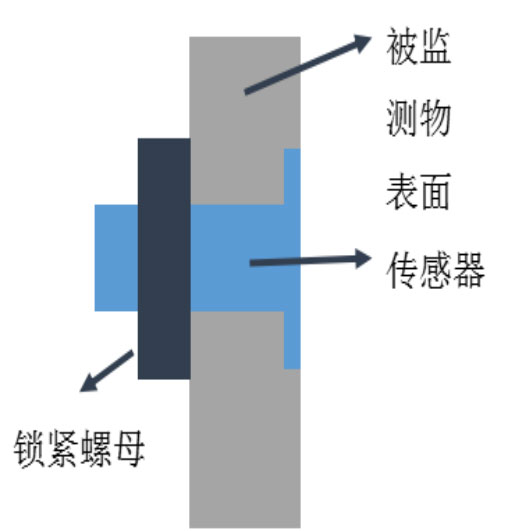
The Ice Monitoring Equipment is installed on the surface of the object under measurement using an embedded mounting method. The sensing face of the sensor is positioned flush with the surface of the object; the guiding principle for installation is to ensure that the sensor's surface maximally reflects the icing conditions present on the object's surface. The sensor is secured to the object's surface using a rear-side nut-locking mechanism. The installation configuration is illustrated in the accompanying figure.
The equipment enclosure icing monitoring sensor features an external mounting design; it is installed vertically on the surface of the enclosure using a mounting bracket, with its monitoring surface positioned to face the wind.
The UAV visibility meter is designed with full consideration of the requirements for UAV mounting. It features a lightweight and compact design, enabling it to be easily adapted to various small UAV platforms and reducing the burden on the UAV during flight. At the same time, the flat body design ca...
There is a hidden hazard invisible to the naked eye in solar photovoltaic panels —— hidden cracks. This hazard can negatively impact the performance and lifespan of photovoltaic power generation systems. Let’s take a detailed look at it.Hidden cracks refer to fine cracks that occur in the cells o...
Complete Weather Station is designed in strict accordance with the observation standards of international meteorological organizations. Utilizing a configuration that combines a data logger with modular sensors, it is capable of measuring between ten and twenty meteorological parameters—inclu...
Negative oxygen ions exert a significant impact on the physiological activities of the human body, and their effects are mainly realized through the nervous system and blood circulation process. For this reason, the concentration of negative oxygen ions in the air has become one of the key indicator...


 Get a Free Quote
 Skype
Skype
 whatsapp
 mail
mail