Tianqiong Sensor IOT Technology Co., Ltd
Sales Manager:Ms. Emily Wang
Cel,Whatsapp,Wechat:+86 15898932201
Email:info@fengtutec.com
Add:No. 155 Optoelectronic Industry Accelerator, Gaoxin District, Weifang, Shandong, China


Sales Manager:Ms. Emily Wang
Cel,Whatsapp,Wechat:+86 15898932201
Email:info@fengtutec.com
Add:No. 155 Optoelectronic Industry Accelerator, Gaoxin District, Weifang, Shandong, China
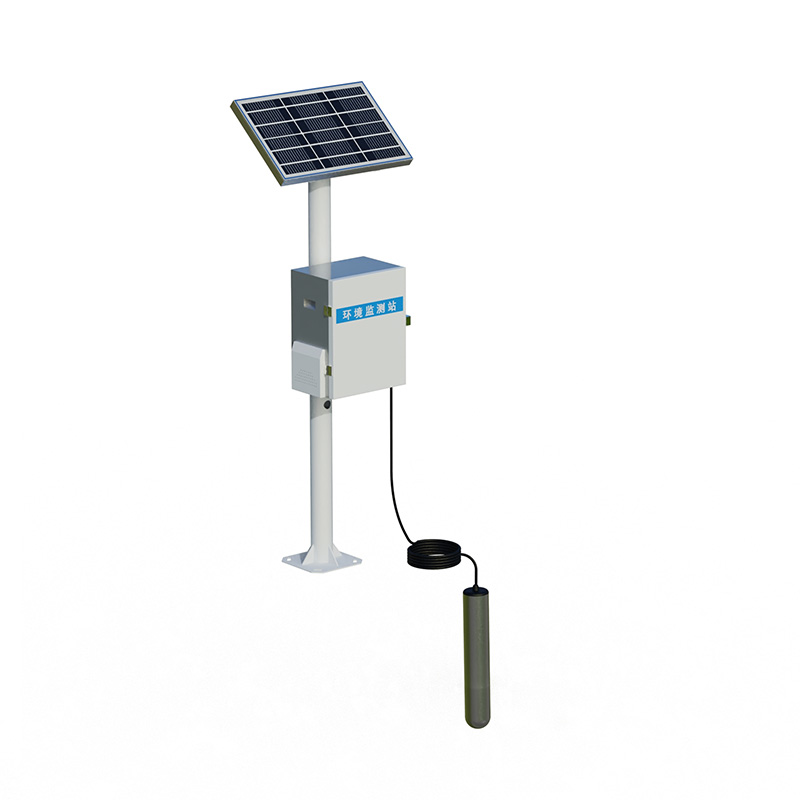
Model:FT-SL1
Brand:tianqiong
Seepage Monitoring monitors seepage in earth dams by continuously measuring reservoir seepage conditions and is used to manage small and medium-sized dams and reservoirs.
Seepage Monitoring primarily consists of on-site testing equipment and remote monitoring equipment.
On-site testing equipment, including weir gauges and triangular weirs, measures reservoir seepage and monitors flow rates.
Remote monitoring equipment, also known as a remote monitoring terminal, collects data from on-site testing equipment and transmits this information to the monitoring center via wireless transmission.
Seepage Monitoring Introduction
The weir gauge uses a magnetostrictive sensor for liquid level measurement. It features high resolution, excellent stability, reliable performance, fast response, linear measurement, resistance to wear, and a long service life. The weir gauge measures the water head above the weir and then calculates the flow rate based on empirical formulas for weir channels (such as triangular, trapezoidal, and rectangular weirs).
Seepage Monitoring Structure and Principle
The water weir meter consists of a magnetic rod, a floating ball, a measuring circuit and a stainless steel casing.When the water level in the weir flume changes, it will drive the float to produce a liquid level difference. The host computer uses the current liquid level minus the calibrated base value to obtain the actual water level on the weir, and then calculates the flow rate according to the weir flume type.
Seepage Monitoring Product Features
High precision and resolution
Excellent stability and fast response
Minimal temperature drift
Standard MODBUS protocol and wide compatibility
Seepage Monitoring Specifications and parameters
| Measurement range | 0~600mm |
| Sensitivity | 0.01mm |
| Measurement accuracy | ≤0.1%F.S |
| Working voltage | DC12V (0.5W@12V) |
| Output signal | RS485-MODBUS protocol |
| Protection level | IP67 |
| Case material | 304 Stainless Steel |
| Dimensions | Φ89×850mm |
Water Quality Monitoring Data Buoys can be fixed in water bodies for a long time, collecting real-time and continuous water quality data such as water temperature, pH value, dissolved oxygen, ammonia nitrogen, and turbidity. With the help of this real-time data, dynamic changes in water quality can...
Soil temperature and moisture are key factors influencing crop growth and ecological environment changes. Accurate detection of these data is of great significance for agricultural production, ecological research, and disaster prevention. Currently, multiple detection methods are available.The soil...
In low-temperature and snowy weather, bridge icing is a serious problem. Bridge icing not only affects the stability of the bridge structure and shortens its service life, but also poses a great threat to the safety of passing vehicles and pedestrians, and is extremely likely to cause traffic accide...
Agricultural production is closely related to weather changes, and weather conditions play a decisive role in the growth, development, and final yield of crops. Torrential rains may trigger floods, submerge farmland, and damage crops. Droughts, on the other hand, can lead to insufficient soil moistu...


 Get a Free Quote
 Skype
Skype
 whatsapp
 mail
mail